Driving with a Firearm Guide for 2026: State Reciprocity Tools, FOPA Transport Rules, and Road-Trip Compliance Steps
A practical travel-law resource explaining how to verify state-by-state carry and transport requirements, use reciprocity maps, and reduce legal risk when crossing jurisdictions with differing firearm rules.
CHICAGO, December 23, 2025 (Newswire.com) - Disclaimer: This article is for informational purposes only and does not constitute legal advice. Firearm laws vary dramatically by jurisdiction and change frequently. Nothing in this article is intended to encourage illegal activity or unsafe firearm handling. Verify current laws in every state through which you plan to travel before departing. This article contains affiliate links. If you access resources through links in this article, a commission may be earned at no additional cost to you. This compensation does not influence the information presented. Insurance-related benefits mentioned are subject to policy terms, conditions, limitations, and exclusions; review the policy documents before relying on any coverage.
2026 Travel Compliance Guide: Avoid Legal Trouble on the Road
The Complete USCCA Guide for 2026: Membership, Travel Resources, Reciprocity Maps, and What Gun Owners Need to Know Before Hitting the Road
You just saw an ad about traveling with your gun. Maybe it mentioned something about getting arrested in the wrong state. Maybe it showed the USCCA reciprocity map. Maybe it was a holiday travel warning that made you suddenly realize you are not entirely sure what the rules actually are.
Now you are here, looking for answers.
Here is the reality that ad was hinting at: penalties can be severe in certain jurisdictions, and mistakes can lead to serious charges. Because firearm laws vary by state and can change, verify the rules for every state on your route before traveling. Some travelers have faced felony charges. Some have had firearms confiscated. The consequences can be life-altering.
The United States Concealed Carry Association offers resources designed to help gun owners navigate this legal complexity, including a free downloadable travel guide, an interactive reciprocity map, and membership programs that include self-defense liability insurance benefits and related protections (subject to policy terms and exclusions).
But is any of it actually worth your time? Is the USCCA legitimate? Does their free guide tell you anything useful? And what do you actually need to know before you throw your bags in the car and head out for the holidays?
This guide covers the most common travel-law issues and points you to tools to confirm current rules for your exact route. Whether you are a brand-new gun owner, a seasoned shooter planning a cross-country road trip, or someone shopping for a practical gift for the gun owner in your life, this resource addresses the major considerations.
Check out the free USCCA Driving With A Firearm Guide here
Disclosure: If you buy through this link, a commission may be earned at no extra cost to you.
Table of Contents
The Legal Landscape Every Gun Owner Should Understand
What Is the USCCA and Is It Legitimate
The Free Traveling With Your Gun Guide Explained
USCCA Membership: Tiers, Benefits, and Important Availability Notes
The USCCA Reciprocity Map and How to Use It
Understanding FOPA: What It Does and Does Not Do
States That Require Extra Caution for Travelers
What to Do If You Get Pulled Over With a Firearm
Holiday Travel With Firearms: A Practical Checklist
New Year 2026: Starting Your Concealed Carry Journey
Who the USCCA May Be Right For
Who Should Consider Other Options
USCCA Compared to Alternatives
Gift Considerations for the Gun Owner in Your Life
Frequently Asked Questions
Final Thoughts and Recommendations
Contact Information and How to Get Started
Part 1: The Legal Landscape Every Gun Owner Should Understand
Before we talk about the USCCA, their guide, or their membership, let me explain why resources like these exist in the first place.
The United States does not have uniform firearm laws. There is no single set of rules that applies everywhere. Instead, you are dealing with 50 different state legal systems, plus Washington D.C., U.S. territories, and countless local municipalities. Each has its own definitions, requirements, and penalties.
What this means for you:
The handgun that sits legally in your vehicle in one state could potentially result in serious charges in another. The magazine capacity that is standard where you live may exceed limits in other states. The concealed carry permit that works in dozens of states may not be recognized in others.
This is not hypothetical. News reports and court records document travelers facing charges for firearms that were legal in their home states.
States Known for Strict Firearm Transport Laws:
Based on publicly available legal resources and attorney guidance:
New York requires state-issued permits for handgun possession. The state does not honor concealed carry permits from other states. Travelers without proper New York licensing may face serious charges.
New Jersey maintains what many firearms attorneys describe as among the strictest transport laws in the nation. The state does not recognize concealed carry permits from any other state.
California has specific requirements involving locked containers, unloaded status, and definitions that differ from many other states.
Massachusetts requires a firearms identification card or license. Non-resident transport is restricted, and the state honors very few out-of-state permits.
Washington D.C. requires registration and has restrictive carry and transport laws that differ from neighboring states.
The Key Takeaway:
You cannot assume your home state rules apply elsewhere. You cannot assume your concealed carry permit works everywhere. Before any interstate travel with a firearm, verify the current laws for every jurisdiction on your route using official state sources or current legal resources.
This is the challenge that USCCA resources are designed to help address.
See the current USCCA travel guide offer
Part 2: What Is the USCCA and Is It Legitimate
One of the most common questions people have after seeing USCCA advertising is simply: is this organization real and trustworthy? Here is what publicly available information tells us.
Company Background:
According to published sources, the USCCA was founded in 2003 in Wisconsin. The organization is operated by Delta Defense, LLC, headquartered in West Bend, Wisconsin. Delta Defense provides sales, marketing, operations, and administrative support services and is a licensed insurance agency in all 50 states and Washington D.C.
Organizational Scale:
The USCCA's official website references serving over 850,000 members. The organization publishes Concealed Carry Magazine, operates training programs, and maintains educational resources for gun owners.
What They Offer:
The USCCA positions itself around three pillars: education, training, and self-defense liability insurance benefits. Their offerings include:
Free resources including the Traveling With Your Gun guide, reciprocity map, and educational content
Paid membership programs at multiple tiers with varying levels of access to training, education, and insurance-related benefits
Self-defense liability insurance benefits that may help with certain legal defense costs and related expenses when coverage applies (subject to policy terms, conditions, limitations, and exclusions)
In-person and online training programs
Is the USCCA Legitimate:
Based on publicly verifiable information, the USCCA appears to be an established organization with over 20 years of operation, a physical headquarters, published contact information, state insurance licensing, and a substantial reported membership base. The organization has been referenced in firearms publications and operates training programs.
Whether the USCCA is the right fit for your specific needs depends on your circumstances, which we will address in detail throughout this guide.
Part 3: The Free Traveling With Your Gun Guide Explained
The specific resource that likely brought you here is the USCCA's free downloadable guide for traveling with firearms. Here is what it covers and whether it is worth your email address.
What the Guide Covers:
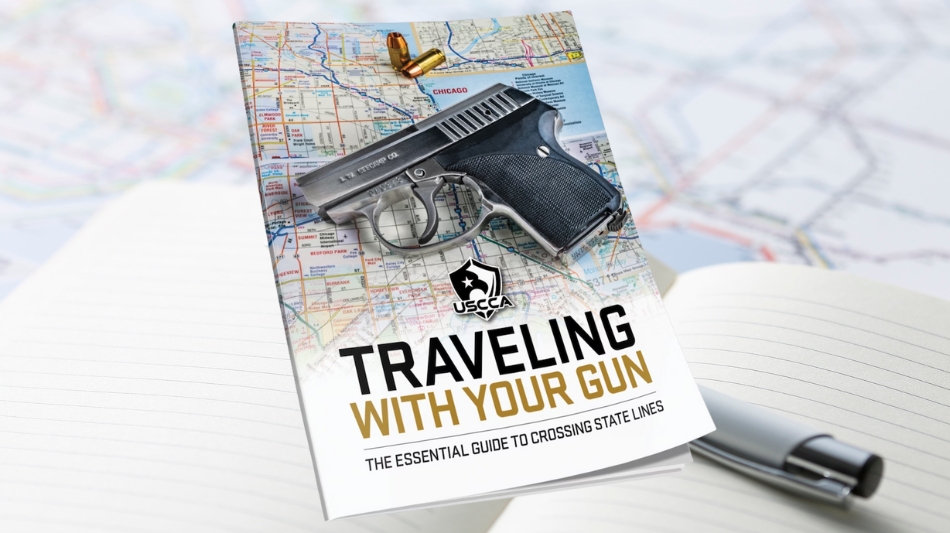
According to the USCCA's official Driving With Firearms page, the Traveling With Your Gun guide addresses six key areas:
Preparation: How to verify your destination's laws and ensure your identification and gear meet legal requirements before you leave.
Planning Safe Stops: Guidance on mapping fuel, food, and rest stops in areas that comply with firearm laws along your route.
Firearm Storage: How to secure your firearm and ammunition in jurisdictions with specific storage requirements.
Being Pulled Over: What to do during a traffic stop, including keeping hands visible, following instructions, and understanding when disclosure may be required.
Crossing State Lines: Understanding reciprocity concepts and federal transportation provisions.
At Your Destination: Checking local laws for hotels, private property, and state-specific considerations.
How to Get the Guide:
According to the website, you visit the USCCA's Driving With Firearms page, enter your email address, and the guide is delivered to your inbox. There is no cost for the guide itself.
What to Expect After Downloading:
The guide is designed to introduce you to USCCA resources and membership. You should expect follow-up communications about their membership program and other offerings. You can unsubscribe from these communications.
Is the Free Guide Worth It:
For the exchange of an email address, you receive a consolidated resource covering travel fundamentals. Whether you eventually explore USCCA membership or not, the guide provides a starting point for understanding interstate firearm travel considerations.
Download the free USCCA travel guide
Part 4: USCCA Membership: Tiers, Benefits, and Important Availability Notes
If you are considering going beyond the free guide to USCCA membership, here is what you should know.
Important Availability Notice:
According to the USCCA's official website, new USCCA memberships are currently unavailable for purchase by residents of New York, New Jersey, and Washington state. If you live in one of these states, membership is not available to you at this time. Verify current availability on the official USCCA website before attempting to enroll.
Membership Tiers:
According to the USCCA website, membership is offered at three levels: Gold, Platinum, and Elite. Each tier provides different levels of access to training content, educational resources, and benefits.
Pricing:
Pricing varies by offer and payment frequency. Some published USCCA membership materials reference Gold, Platinum, and Elite tiers at different monthly and annual price points, but offers can vary. Verify current membership pricing and terms on the official USCCA website before enrolling. Do not rely on any pricing mentioned elsewhere as it may not reflect the current offer available to you.
Refund and Guarantee Terms:
Refund and guarantee terms can vary by offer and product. Some USCCA materials reference money-back guarantees, but the specific terms depend on the offer. Confirm current guarantee terms on the official USCCA site during enrollment to understand what applies to your specific purchase.
What Membership Generally Includes:
According to USCCA materials, membership benefits may include:
Self-Defense Liability Insurance Benefits: Members become additional insureds on a self-defense liability insurance policy. Benefits may help with certain legal defense expenses, bail bond funds, and lost earnings related to covered self-defense incidents. All benefits are subject to the terms, conditions, limitations, and exclusions of the insurance policy. Review the full policy documents on the USCCA website before purchase.
Critical Response Team Access: A hotline members can call after a self-defense incident.
Concealed Carry Magazine: The organization's publication.
Member Discounts: Discounts from partner brands.
Training and Educational Content: Access varies by membership tier.
Before You Join:
Verify current pricing on the official website
Review the specific guarantee and refund terms for the offer you are considering
Read the full insurance policy terms and exclusions
Confirm membership is available in your state (currently unavailable to NY, NJ, and WA residents)
Part 5: The USCCA Reciprocity Map and How to Use It
One of the most useful free tools the USCCA offers is their interactive Concealed Carry Reciprocity Map. Whether or not you become a member, this resource can help you understand where your permit may be recognized.
What the Reciprocity Map Shows:
The USCCA's interactive map allows you to select one or more concealed carry permits and see which states may honor those permits. The map provides state-specific information about gun laws.
How to Use It:
Visit the USCCA's reciprocity map page, select your permit state(s), and view the results. You can click on individual states to see more detailed information.
Important Limitations:
Reciprocity agreements and state laws change. Any reciprocity map, including the USCCA's, represents information as of a particular point in time. Always verify current law with official state sources before traveling. Do not rely solely on any third-party map or tool for legal decisions.
Reciprocity vs. Transportation:
Reciprocity generally refers to states honoring your permit for loaded, accessible concealed carry.
Transportation under federal law (FOPA) refers to moving an unloaded, secured firearm through states regardless of permit status.
These are different legal frameworks. Just because a state does not honor your permit does not necessarily mean you cannot transport a properly secured firearm through that state. But the rules are different, and the details matter.
Part 6: Understanding FOPA: What It Does and Does Not Do
If you plan to drive through states that do not honor your permit, you need to understand the Firearm Owners' Protection Act (FOPA), specifically 18 U.S.C. Section 926A. This is where many gun owners run into trouble.
What FOPA Provides:
FOPA provides that a person who can legally possess a firearm may transport it from one place where they can lawfully possess it to another place where they can lawfully possess it, notwithstanding state or local laws along the way, provided the firearm is:
Unloaded
Not readily accessible from the passenger compartment (typically locked in the trunk)
With ammunition stored separately (ideally in a separate locked container)
For vehicles without a separate trunk, the firearm should be in a locked container other than the glove compartment or console.
What FOPA Does NOT Provide:
This is critical to understand:
FOPA can be limited in practice and may be treated as an affirmative defense in some jurisdictions rather than preventing arrest. This means you may still be stopped, detained, or charged. FOPA becomes relevant as a defense you raise, potentially in court. It may not prevent an arrest from occurring.
FOPA may not address magazine capacity or certain firearm type restrictions. State restrictions on magazine capacity or specific firearm definitions may still apply separately.
FOPA applies to continuous travel. Extended stops, hotel stays, visiting friends, or tourist activities may affect whether FOPA's provisions apply. The protection is intended for transport, not extended presence in a jurisdiction.
Air travel is governed by TSA and airline rules, plus state and local law at your destination. FOPA's provisions are for surface transportation.
Enforcement and interpretation varies by jurisdiction. Some states and localities have been more aggressive in enforcement against travelers.
Practical Guidance:
Because details vary by jurisdiction and circumstances, confirm current requirements using official sources. Consider consulting legal counsel for complex travel plans or routes through restrictive states. Do not rely on FOPA as your sole protection strategy.
Part 7: States That Require Extra Caution for Travelers
Based on attorney guidance and publicly available legal resources, certain states warrant extra caution for travelers with firearms.
States with Notably Strict Laws:
New York: Requires state permits for handgun possession. Does not honor out-of-state concealed carry permits. Has specific restrictions that travelers should research carefully.
New Jersey: Does not recognize out-of-state permits. Has restrictions on ammunition types, magazine capacity, and other aspects. Many firearms attorneys recommend extra caution for travelers.
California: Has specific transport requirements, magazine capacity limits, and firearm definitions that differ from many other states.
Massachusetts: Requires state licensing. Honors very few out-of-state permits.
Washington D.C.: Requires registration. Has restrictive carry laws.
Illinois: Does not honor most out-of-state concealed carry permits.
What This Means for You:
If your route passes through any of these jurisdictions, research the current laws carefully before you travel. Consider:
Whether you can plan an alternative route
The specific transport requirements if you must pass through
Whether consulting an attorney familiar with that state's laws would be prudent
Important Note:
Laws change. This information reflects general patterns but is not legal advice. Always verify current law with official state sources or qualified legal counsel for your specific situation.
Get the USCCA guide for travel preparation resources
Part 8: What to Do If You Get Pulled Over With a Firearm
One of the most anxiety-inducing scenarios for armed travelers is being pulled over in an unfamiliar state. Here is general guidance.
Know Your Disclosure Requirements:
Duty-to-inform rules vary by state and can change. Some states legally require immediate disclosure that you have a firearm. Others only require disclosure if asked. Some have no requirement.
Before traveling, check the current duty-to-inform requirement for each state on your route using official state sources or an up-to-date reciprocity tool. Do not rely on any list you find online as it may be outdated.
General Guidance During a Stop:
Pull over safely and completely. Find a well-lit area if possible. Turn off your engine.
Keep your hands visible. Place them on the steering wheel where the officer can see them. Do not reach for anything until instructed.
If disclosure is required or you choose to disclose, use calm, clear language. Wait for instructions.
Never reach toward your firearm unless explicitly instructed. If asked where it is, tell them verbally. Let the officer direct next steps.
Follow instructions exactly. Comply with all lawful requests.
You may decline consent to search your vehicle. You can politely say you do not consent to searches. This does not guarantee they will not search, but it may preserve legal options.
If You Are Detained or Arrested:
Do not resist. Comply with the process.
State clearly that you are invoking your right to remain silent and your right to an attorney.
Do not try to argue or explain on the roadside. Your defense happens later, with legal counsel.
If you are a USCCA member, contact their Critical Response Team.
Part 9: Holiday Travel With Firearms: A Practical Checklist
If you are reading this during the holiday season or planning upcoming travel, here is a practical checklist.
Before You Leave:
Map your complete route. Identify every state you will pass through, even briefly.
Check permit reciprocity for each state. Use the USCCA reciprocity map as a starting point and verify with official state sources.
Identify states where you need to secure your firearm differently. For states that do not honor your permit, you may need to transport unloaded, in a locked container, in the trunk or cargo area.
Check magazine capacity limits along your route. If your standard magazine exceeds limits in states you will pass through, plan accordingly.
Research disclosure requirements for each state. Use official state sources to confirm current duty-to-inform rules.
Have documentation accessible. Permit, identification, and any relevant materials you have prepared.
The Day You Leave:
Verify your firearm is secured appropriately for the most restrictive state on your route.
Check ammunition storage meets requirements for your route.
Confirm your permit is with you.
During Travel:
Minimize stops in restrictive states if possible.
Do not handle your firearm while in restrictive jurisdictions unless necessary.
At Your Destination:
Verify local laws before unpacking or carrying.
Understand the rules for wherever you are staying.
Part 10: New Year 2026: Starting Your Concealed Carry Journey
If you are thinking about making personal safety a priority in the new year, here is a practical roadmap.
Step 1: Understand Your State's Requirements
Research your state's concealed carry laws. Some states allow permitless carry for residents. Others require permits with background checks and training requirements.
Step 2: Get Proper Training
Even if your state does not require training, consider getting it. Handling a firearm safely, especially under stress, is a learned skill.
Step 3: Complete Any Required Permit Process
If your state requires a permit, complete the application, any required training, and obtain your credentials.
Step 4: Select Appropriate Equipment
Choose a firearm that fits your hand and your intended use. Select a quality holster. Consider storage solutions for home and vehicle.
Step 5: Practice Regularly
Regular training maintains and improves the skills you need.
Step 6: Understand the Legal Framework
Know your state's laws regarding where you can and cannot carry. Understand use-of-force principles. Consider whether self-defense liability coverage makes sense for your situation.
Step 7: Plan for Travel
Before your first interstate trip with your firearm, research reciprocity, transport laws, and federal provisions.
Part 11: Who the USCCA May Be Right For
Based on what the USCCA offers, here are profiles of people who may find value in their resources.
The Free Guide May Be Useful For:
Anyone planning interstate travel with a firearm who wants a consolidated starting resource
New gun owners or new permit holders
Experienced gun owners who have not traveled interstate with firearms before
People who want a framework for understanding travel considerations
Membership May Be Worth Considering For:
Gun owners who want self-defense liability insurance benefits (subject to policy terms, conditions, and exclusions, and not available to NY, NJ, or WA residents)
People who value structured training and educational content
Those who want consolidated concealed carry resources in one platform
Gun owners concerned about the potential legal aftermath of self-defense situations
Remember:
Membership is currently unavailable to residents of New York, New Jersey, and Washington state
All insurance benefits are subject to policy terms, conditions, and exclusions
Verify current pricing and terms on the official website before enrolling
Part 12: Who Should Consider Other Options
The USCCA is not the right fit for everyone.
Other Options May Be Better For:
Residents of NY, NJ, or WA: Membership is currently unavailable to new members in these states.
People who only need reciprocity information: Free resources, including the USCCA's own free map, may be sufficient.
Gun owners on a tight budget: There are alternatives in the self-defense coverage space at different price points. Comparing multiple options is reasonable.
Those who prefer different coverage structures: Different providers offer different coverage models. Comparing options before committing makes sense.
People who need jurisdiction-specific legal advice: General educational resources do not replace consultation with an attorney for specific situations.
Part 13: USCCA Compared to Alternatives
For context, here is how the USCCA fits in the broader landscape.
Self-Defense Coverage Alternatives:
Several organizations offer self-defense coverage or legal protection products, including CCW Safe, Second Call Defense, and Armed Citizens Legal Defense Network. Each has different structures, coverage models, and pricing. Comparing multiple options based on your specific needs is worthwhile before making a decision.
Free Resources:
Substantial information about firearm laws is available from state government websites, the NRA-ILA, and other sources. The advantage of consolidated resources like what the USCCA offers is convenience. The trade-off is the associated marketing relationship.
Making Your Decision:
If self-defense coverage is your primary interest, compare multiple providers on coverage, cost, and terms.
If education and training are your primary interest, evaluate multiple sources.
If you just need reciprocity and travel information, free resources may be sufficient.
Part 14: Gift Considerations for the Gun Owner in Your Life
If you are shopping for a gun owner, here are thoughts on USCCA-related options.
Free Option:
Share the link to the free travel guide. For gun owners who travel, it is a practical resource that costs nothing.
Membership:
Gift memberships may be available (verify on the official website). This would provide training resources and insurance benefits where available and subject to policy terms.
Considerations:
Verify the recipient's state of residence (membership unavailable in NY, NJ, WA)
Understand any ongoing costs after a gift period
Some gun owners have preferences about which coverage provider they use
Part 15: Frequently Asked Questions
Is the USCCA a legitimate organization?
Based on publicly verifiable information, the USCCA was founded in 2003, is headquartered in West Bend, Wisconsin, is operated by Delta Defense, LLC (a licensed insurance agency), and reports serving over 850,000 members.
Is the Driving With A Firearm Guide really free?
According to the USCCA website, the guide is provided at no cost in exchange for your email address. You will receive follow-up marketing communications, which you can unsubscribe from.
Does FOPA protect me if I travel through New York or New Jersey?
FOPA may provide an affirmative defense for properly conducted transport, but it may not prevent stops, detention, or charges in some jurisdictions. Many attorneys recommend extra caution or considering alternative routes when possible.
Can anyone join the USCCA?
According to the USCCA website, new memberships are currently unavailable to residents of New York, New Jersey, and Washington state. Verify current availability on the official website.
How much does USCCA membership cost?
Pricing varies by tier and promotional offers. Verify current pricing on the official USCCA membership page before enrolling.
Does my concealed carry permit work in every state?
No. Reciprocity varies widely. Use the USCCA reciprocity map as a starting point, and always verify with official state sources before traveling.
What is the difference between reciprocity and FOPA transportation rights?
Reciprocity refers to states honoring your permit for loaded, accessible carry. FOPA transportation provisions refer to transporting an unloaded, secured firearm through states. Different legal frameworks, different rules.
What states require me to tell the officer I have a gun?
Duty-to-inform requirements vary by state and change. Check official state sources for current requirements before traveling. Do not rely on any third-party list.
Can I bring my gun on an airplane?
Air travel is governed by TSA rules, airline policies, and state and local law at your destination. Firearms must be unloaded, in a locked hard-sided container, declared at check-in, and transported in checked baggage only.
Get the free USCCA travel guide
Part 16: Final Thoughts and Recommendations
On the Free Travel Guide:
The USCCA's guide provides a consolidated starting point for understanding firearm travel considerations. For the exchange of an email address, you receive educational content that can help frame your research and preparation.
On Membership:
Whether membership makes sense depends on your circumstances:
If you carry regularly and want self-defense liability coverage (and you live in an eligible state), the insurance-related benefits may be valuable, subject to policy terms and exclusions.
If you value structured training content, the educational resources may be useful.
If budget is a concern, compare multiple providers before deciding.
If you live in NY, NJ, or WA, membership is currently unavailable.
The Fundamental Point:
No guide, membership, or resource replaces your responsibility to know the law in every jurisdiction where you travel with a firearm. Resources like those the USCCA provides are tools to support that responsibility, not substitutes for it.
Laws change. What is accurate today may change. Always verify current law with official state sources. Consider consulting an attorney for complex situations.
Part 17: How to Get Started
How to Get the Free Guide:
Visit the USCCA's Driving With Firearms page, enter your email address, and the guide is delivered to your inbox.
How to Explore Membership:
Visit the USCCA membership page, review current pricing and terms, verify availability in your state (currently unavailable to NY, NJ, and WA residents), and review the insurance policy documents before making a decision.
Get started with the free USCCA Driving With A Firearm Guide
USCCA Contact Information:
According to the company's official website:
Phone: 800-674-9779
Website: usconcealedcarry.com
Related: Protecting Houses of Worship Guide Review: The Complete Church Security Resource Guide
Disclaimer
Editorial Disclaimer: This article is for informational purposes only and does not constitute legal advice. The information provided reflects publicly available details and general firearms law principles as of the publication date (December 2025). Laws change frequently. Always verify current laws with official state sources or qualified legal counsel before traveling with firearms.
Legal Compliance Disclaimer: Firearm laws vary dramatically by jurisdiction. What is legal in one state may be prohibited in another. FOPA provides limited federal provisions for interstate transport but may function as an affirmative defense and does not necessarily prevent enforcement actions in some jurisdictions. Always verify current law in every jurisdiction through which you will travel.
Availability Disclaimer: According to the USCCA website, new memberships are currently unavailable to residents of New York, New Jersey, and Washington state. Verify current availability before attempting to enroll.
Insurance Disclaimer: Self-defense liability insurance benefits described in this article are subject to the terms, conditions, limitations, and exclusions of the insurance policy. Not all situations are covered. Benefits may vary. Review the complete policy documents on the USCCA website before purchase. Insurance benefits are provided under a policy issued to the USCCA by Universal Fire and Casualty Insurance Company.
Pricing and Guarantee Disclaimer: Pricing, promotional offers, and refund or guarantee terms vary by offer and may change. Always verify current pricing, terms, and guarantee provisions on the official USCCA website before making a purchase decision.
FTC Affiliate Disclosure: This article contains affiliate links. If you access resources through these links, a commission may be earned at no additional cost to you. This compensation does not influence the accuracy or editorial independence of the information presented.
Publisher Responsibility Disclaimer: The publisher has made reasonable efforts to ensure accuracy at the time of publication. We do not accept responsibility for errors, omissions, or outcomes resulting from use of this information. Verify all details with official sources and qualified professionals before making decisions.
SOURCE: USCCA
Source: USCCA