Vadzo Imaging Validates Bolt-2020MRS 20MP Monochrome MIPI Camera Across Single, Dual, and Quad Camera Configurations on NVIDIA Jetson Orin NX
Vadzo Imaging confirms validated NVIDIA Jetson Orin NX support for the Bolt-2020MRS, a 20MP Onsemi AR2020 Monochrome MIPI Camera, across single camera, dual camera, and quad camera MIPI CSI-2 configurations, with module-level V4L2 Camera Driver support and confirmed ISP pipeline compatibility for fleet management, drone/UAV, medical device, and AGV/AMR deployments requiring high-resolution monochrome imaging at the edge.
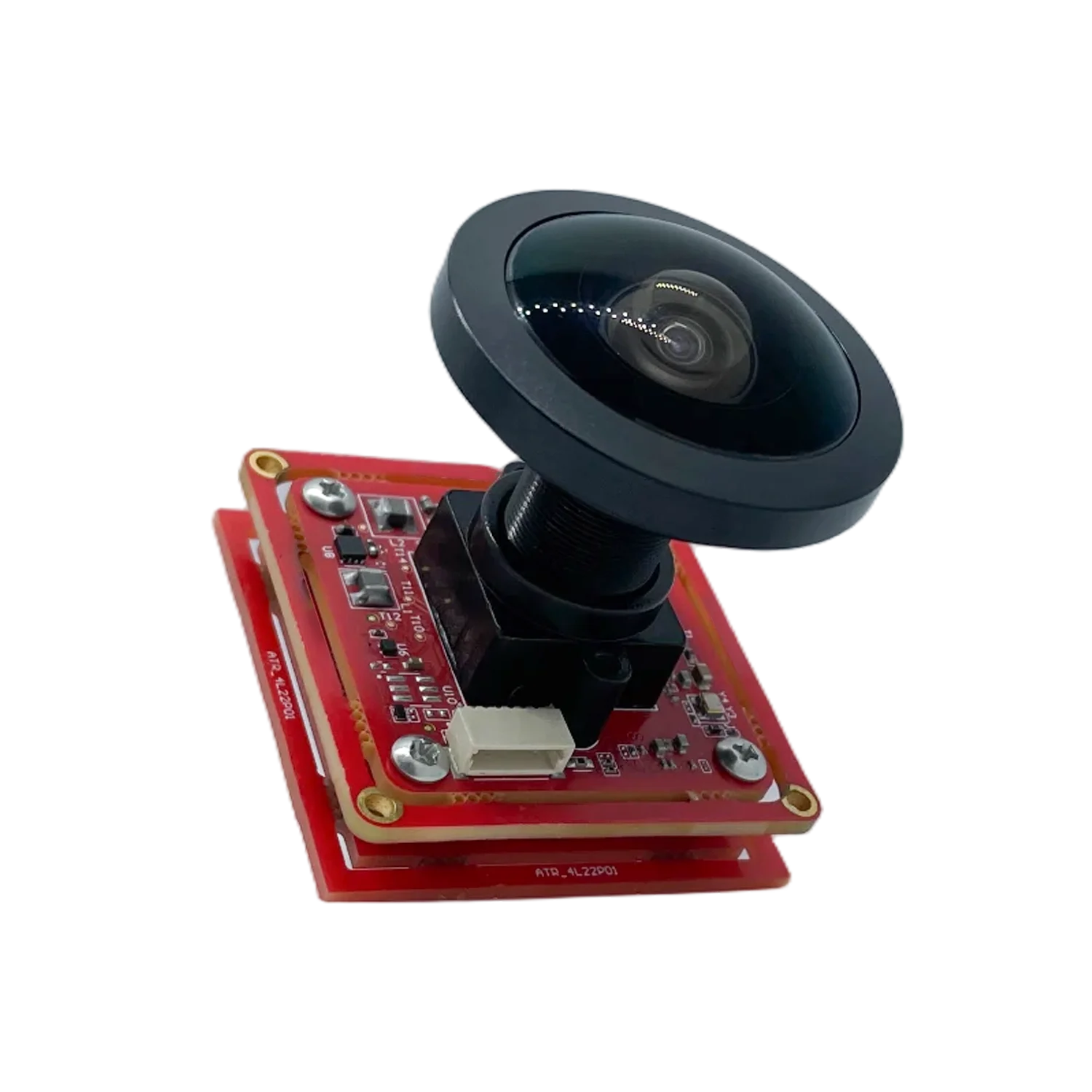
SAN JOSE, Calif., July 7, 2026 (Newswire.com) - Vadzo Imaging, a provider of embedded vision cameras for OEMs and system integrators, today announces validated NVIDIA Orin NX Camera integration for the Bolt-2020MRS AR2020 Mono MIPI Camera across three distinct multi-camera architectures. Each configuration carries verified V4L2 driver support, confirmed MIPI CSI-2 bring-up, and validated ISP pipeline behavior on the Orin NX platform, giving embedded vision engineers a direct path to production on one of NVIDIA's most widely deployed edge AI modules without driver development overhead
Why a 20MP Camera for NVIDIA Orin NX Needs Multi-Camera Validation
A single-camera driver validation does not guarantee multi-camera stability. When a second, third, or fourth AR2020 Monochrome MIPI Camera is added to an Orin NX Camera pipeline, MIPI lane allocation, sensor synchronization, ISP node contention, and per-camera frame timing all introduce failure modes that don't appear in a single-camera bring-up. Embedded teams building stereo vision, multi-angle inspection, or 360° AGV/AMR sensing around the Orin NX platform need a 20MP Mono MIPI Nvidia Camera validated at both the lane configuration and camera density they intend to ship. For OEMs comparing options, a validated Nvidia Camera platform at this resolution removes an entire phase of in-house driver bring-up.
Vadzo Imaging delivers exactly that: the Bolt-2020MRS ships with a module-level Linux V4L2 Camera Driver for Jetson Orin NX, validated at two distinct MIPI lane configurations depending on camera density. Single and dual camera deployments run each Bolt-2020MRS at full 4-lane MIPI CSI-2 bandwidth, preserving maximum per-sensor throughput for full-resolution capture. Quad camera deployments run each sensor at 2-lane MIPI CSI-2, trading per-camera bandwidth headroom for the CSI-2 port count needed to bring four synchronized 20MP Mono MIPI camera streams into a single Orin NX Camera module. Both lane configurations are independently validated for stable exposure control, frame synchronization, and ISP output across their respective camera densitie
Bolt-2020MRS - Onsemi AR2020 | 20MP Monochrome MIPI Camera
Fleet telematics systems, drone inspection payloads, diagnostic imaging platforms, and AGV/AMR navigation stacks share a common resolution constraint: identifying small text, fine surface defects, distant obstacles, or subtle tissue contrast at range requires pixel density that most embedded MIPI cameras don't carry. The Bolt-2020MRS answers this directly as a 20MP Mono camera built on the Onsemi AR2020 MIPI camera platform, a 1/1.8" back-side illuminated stacked CMOS sensor from the Hyperlux LP family with a 5120 x 3840 active pixel array and 1.4 µm BSI pixel, now validated as an Nvidia Orin NX Camera across three deployable configurations.
Monochrome capture removes the Bayer color filter entirely, increasing per-pixel light collection and delivering higher effective sensitivity than a color sensor at the same resolution, a direct advantage for low-light drone inspection, NIR-illuminated documentation capture, and nighttime fleet monitoring. As a 20MP Mono camera, the Bolt-2020MRS supports enhanced NIR response at 850nm and 940nm, Dynamic ROI for bandwidth-optimized region capture, Wake on Motion for power-efficient standby operation in parked fleet vehicles or stationary AGV checkpoints, and multiple subsampling modes (binning, summing, skipping, windowing) that let the same sensor serve both full-resolution documentation and higher-frame-rate real-time tracking without a hardware change. Enhanced Dynamic Range (eDR) and Line-Interleaved HDR (LI-HDR) modes extend usable contrast range for mixed-lighting fleet yards and outdoor drone missions.
Key specs: 20MP (5120x3840) | Onsemi AR2020 1/1.8" Monochrome BSI Stacked CMOS, 1.4µm pixel | Electronic Rolling Shutter with Global Reset Release | eDR / LI-HDR | Dynamic ROI | Wake on Motion | NIR sensitivity (850nm/940nm) | 38mm x 38mm board, convertible to 32mm x 32mm
Single Camera Configuration - 4-Lane MIPI CSI-2
The single-camera Bolt-2020MRS configuration on Orin NX runs at full 4-lane MIPI CSI-2 bandwidth, validated for full-resolution 20MP capture on one CSI-2 port. This is the correct configuration for a single forward-facing fleet dashcam, a drone inspection camera, or a single-scope diagnostic imaging device where one high-resolution monochrome sensor covers the full field of view at maximum throughput.
Dual Camera Configuration - 4-Lane MIPI CSI-2 per Camera
The dual-camera Bolt-2020MRS configuration validates two synchronized AR2020 Mono MIPI Camera units, each running independently at 4-lane MIPI CSI-2, with confirmed frame-sync and independent exposure control across both streams. This is the correct configuration for stereo depth estimation on AGVs and AMRs, front-and-rear fleet camera pairs, or dual-angle drone payloads capturing simultaneous wide and detail views - without sacrificing per-camera bandwidth.
Quad Camera Configuration - 2-Lane MIPI CSI-2 per Camera
The quad-camera Bolt-2020MRS configuration validates four AR2020 Monochrome MIPI Camera units operating simultaneously on a single Orin NX module, each running at 2-lane MIPI CSI-2 to fit four synchronized streams within the available CSI-2 port budget. Vadzo has confirmed stable ISP pipeline behavior and synchronized capture across all four 2-lane streams. This is the correct configuration for 360° AGV/AMR perception rings, multi-corner fleet surveillance systems, and multi-payload drone inspection rigs requiring full-perimeter monochrome coverage from one compute module.
Applications Areas
Fleet Management
A 20MP camera for Nvidia Orin NX gives fleet operators enough resolution to read license plates, signage, and cargo labeling at highway distance while running on the same Nvidia Camera compute module already handling driver monitoring or ADAS workloads. The dual (4-lane) and quad (2-lane) Bolt-2020MRS configurations support multi-angle fleet coverage, such as front, rear, and side monochrome streams from a single compute module.
Drones/UAVs
NIR sensitivity and monochrome sensitivity advantages make the Bolt-2020MRS well suited to low-light and dusk/dawn drone inspection missions where color information is not required but detail retention at distance is critical. The single-camera 4-lane configuration serves standard nadir inspection payloads at full bandwidth, while the dual-camera configuration enables simultaneous wide-context and zoomed-detail capture in one flight pass - both validated as an AR2020 MIPI camera pipeline on Orin NX.
Medical Devices
High pixel density and monochrome grayscale accuracy are established requirements in diagnostic and pathology imaging. As a 20MP Mono MIPI camera validated on Orin NX, the Bolt-2020MRS supports embedded diagnostic platforms, cartridge and slide imaging systems, and portable point-of-care devices that need onboard AI inference alongside high-resolution monochrome capture, running on the single-camera 4-lane configuration for maximum image fidelity. This makes it a practical high resolution camera for Nvidia Orin NX in space-constrained diagnostic hardware.
AGVs and AMRs
The quad-camera 2-lane Bolt-2020MRS configuration is directly suited to AGV and AMR perception stacks requiring 360° obstacle and marker detection, where four synchronized 20MP Mono MIPI Nvidia Camera units feed a single Orin NX module for simultaneous navigation and inspection tasks. SmartROI lets the same camera array run full-resolution capture for aisle marker or QR reading and a windowed high-frame-rate stream for real-time obstacle avoidance, without switching hardware.
"Validating the Bolt-2020MRS at single, dual, and quad camera densities on Orin NX meant validating two different lane configurations, not just camera count. Single and dual deployments hold full 4-lane bandwidth per sensor. Quad deployments run each camera at 2-lane to fit four synchronized 20MP streams into one module. We wanted OEM teams building AGV perception rings or multi-camera fleet systems to know exactly which lane configuration they're getting at each camera density, not a generic 'multi-camera supported' claim."- - Product Engineering Team, Vadzo Imaging
Frequently Asked Questions
1) What image sensor powers the Bolt-2020MRS?
The Bolt-2020MRS is built on the Onsemi AR2020, a 20MP, 1/1.8" back-side illuminated stacked CMOS sensor from the Hyperlux LP family, with a 5120 x 3840 active pixel array and 1.4µm BSI pixel. As an AR2020 Monochrome MIPI camera, it delivers enhanced NIR response at 850nm and 940nm and supports eDR and Line-Interleaved HDR modes.
2) What MIPI lane configuration does the Bolt-2020MRS use on Orin NX?
It depends on camera density. Single and dual camera Bolt-2020MRS deployments run at full 4-lane MIPI CSI-2 per camera. Quad camera deployments run each of the four cameras at 2-lane MIPI CSI-2 to fit within the Orin NX's available CSI-2 port budget. Vadzo has validated both lane configurations independently.
3) Which Bolt-2020MRS configuration is right for AGV or AMR navigation?
The quad camera (2-lane) configuration is the correct choice for AGVs and AMRs requiring 360° perception. It provides four synchronized 20MP Mono MIPI Camera streams from a single Orin NX module, validated for simultaneous obstacle detection and navigation-marker reading.
4) Does the dual camera configuration reduce per-camera bandwidth on Orin NX?
No. The dual camera Bolt-2020MRS configuration runs both AR2020 MIPI camera streams at full 4-lane MIPI CSI-2 each, with confirmed frame-sync and independent exposure control - the same per-camera bandwidth as the single camera configuration.
5) Is the Bolt-2020MRS suitable as a high resolution camera for Nvidia Orin NX in medical devices?
Yes. The 20MP Mono MIPI Nvidia Camera configuration supports diagnostic imaging, cartridge scanning, and portable point-of-care platforms requiring high spatial resolution and monochrome grayscale accuracy, with onboard AI inference handled natively by the Orin NX module.
Availability
The Bolt-2020MRS 20MP Monochrome MIPI Camera is available now for evaluation and production orders in single, dual, and quad camera configurations, with no minimum order requirement. Evaluation units include the camera module, default M12 lens, and Jetson Orin NX camera driver documentation for the selected configuration. Contact support@vadzoimaging.com or +1 817-678-2139 to request evaluation units or discuss OEM integration requirements.
About Vadzo Imaging
Vadzo Imaging develops embedded and machine vision cameras for OEMs and system integrators building production-ready vision systems across fleet management, UAV and drone platforms, medical devices, and autonomous mobile robotics. The company's imaging platforms span MIPI CSI-2, USB, GigE, Wi-Fi, and SerDes interfaces, supporting the full range of embedded deployment architectures from single-sensor compact payloads to synchronized multi-camera systems. Vadzo provides end-to-end imaging support including sensor integration, ISP tuning, firmware development, and OEM customization services that simplify development and deployment at scale.
Media Contact:
Alwin Vincent
Vadzo Imaging
Phone: +1 817-678-2139
Email: alwin@vadzoimaging.com
LinkedIn: Vadzo Imaging
YouTube: Vadzo Imaging
X: Vadzo Imaging
SOURCE: Vadzo Imaging
Source: Vadzo Imaging
Related Media