Social Explorer Becomes Comprehensive Platform for Community Analysis With Addition of 40+ Essential Datasets
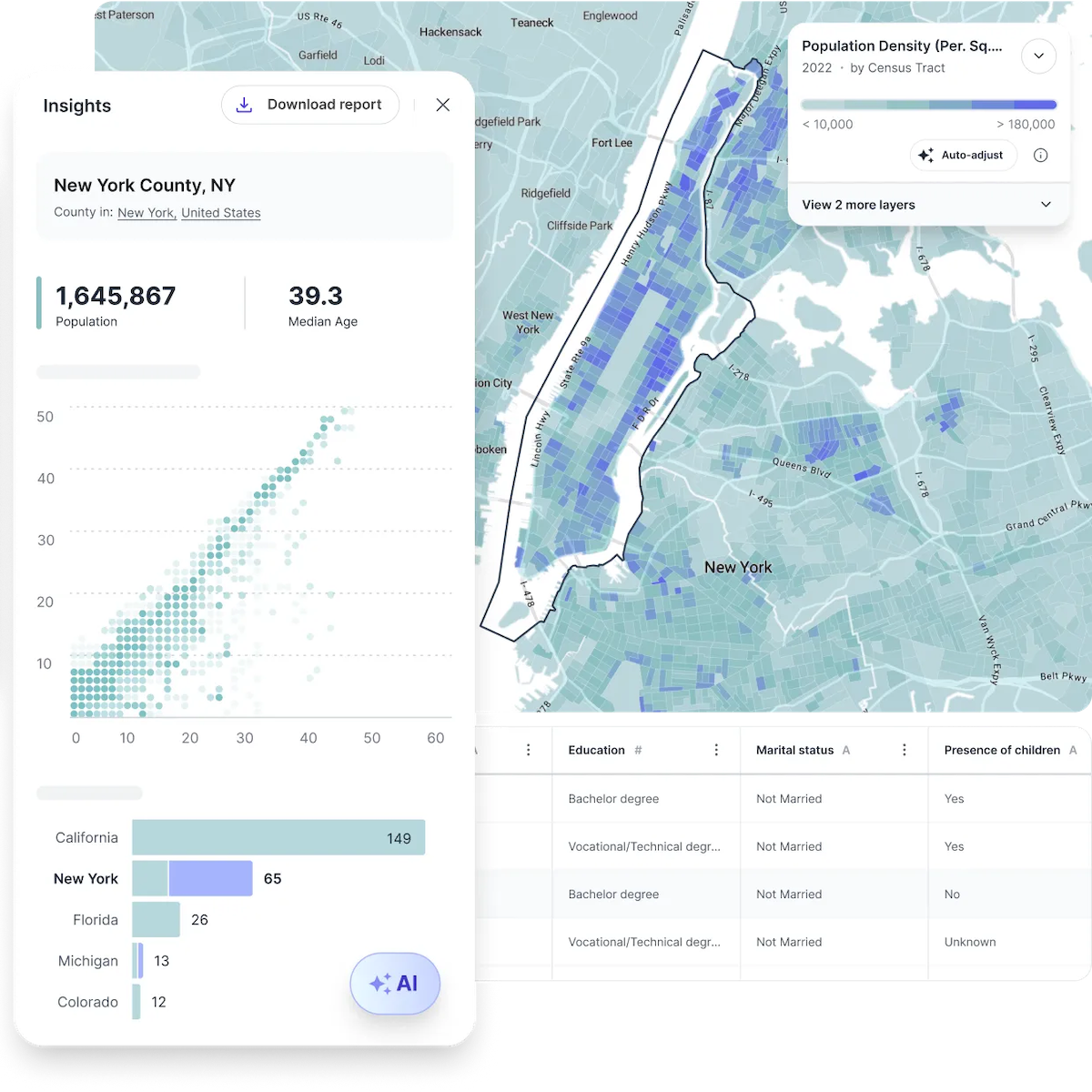
NEW YORK, November 18, 2025 (Newswire.com) - Social Explorer announced a major expansion of its data library, adding more than forty datasets that transform its web application into a one-stop solution for community analysis. Known primarily for demographic data, Social Explorer now offers professionals across industries - from urban planning to real estate investment to public health - a unified platform for understanding communities through demographic, economic, environmental, health, and social equity data.
This expansion positions Social Explorer as the go-to platform for anyone who needs to understand community composition, how they function, why they change, and what interventions work. Users can now analyze communities through multiple dimensions in a single platform:
Economic Vitality & Workforce Dynamics - The Job-to-Job Flows (J2J), Business Formation Statistics (BFS), Local Area Unemployment Statistics (LAUS), and Nonemployer Statistics (NES) datasets provide insights into labor markets and entrepreneurship trends.
Housing & Real Estate Intelligence - Housing Affordability Strategy (CHAS) and Location Affordability Index (LAI) data enables the analysis of housing markets, affordability gaps, and investment opportunities.
Infrastructure & Environment - The Freight Analysis Framework (FAF), Air Quality Index (AQI), and Environmental Justice Screening & Mapping (EJSCREEN) support transportation planning, environmental assessment, and infrastructure investment decisions.
Risk & Resilience - The FEMA National Risk Index (NRI) and NOAA Climate Normals help assess disaster preparedness, climate adaptation needs, and community resilience.
Health & Equity - The Food Access Research Atlas (FARA), Fatality Analysis Reporting System (FARS), and Social Vulnerability Index (SVI) enable analysis of community health, safety patterns, and social determinants of wellbeing.
Who Benefits
Urban Planners & Municipal Officials can conduct comprehensive community needs assessments, evaluate zoning decisions, and design data-driven resilience strategies.
Real Estate Developers & Investors can gain access to workforce trends, housing affordability metrics, transportation infrastructure data, and environmental risk factors that influence property values and development feasibility.
Public Health Departments can correlate food access, environmental hazards, social vulnerability, and health outcomes to target interventions and resources.
Economic Development Professionals can track business formation, analyze workforce mobility, identify growth sectors, and understand regional competitiveness.
Community Organizations & Nonprofits can document disparities, strengthen grant applications, and advocate for resources.
Academic Researchers can access the same authoritative data used by practitioners, strengthening both teaching and research.
Consultants & Policy Analysts can deliver community assessments without maintaining subscriptions to multiple data sources.
Why This Matters Now
Communities and the organizations that serve them face increasingly complex challenges - from housing demands to workforce development and public health needs. Addressing these issues requires seeing the full picture, assembled through a combination of demographic, economic, environmental, health, and social equity data.
"Decision-makers have always needed demographic data, but they also need economic indicators, environmental metrics, and equity measures - all in one place," said Dickson Musslewhite, CEO of Social Explorer. "This expansion makes Social Explorer the command center for anyone serious about understanding and improving communities."
Source: Jake Gerli