Daybreak Sleep Apnea Device 2026: Pricing, How It Works, Insurance Coverage, and What to Know Before You Order
How a Custom FDA-Cleared Oral Appliance Gets Prescribed, Delivered, and Covered by Insurance - Without a Single In-Office Visit
NEW YORK, March 17, 2026 (Newswire.com) - Disclaimers: This article is for informational purposes only and is not medical advice, diagnosis, or treatment. Sleep apnea is a medical condition that requires evaluation by a qualified healthcare professional. This article discusses a telehealth platform and a prescription medical device - neither of which replaces a comprehensive evaluation by your personal physician. This article contains affiliate links. If you purchase through these links, a commission may be earned at no additional cost to you. This compensation does not influence the accuracy, neutrality, or integrity of the information presented in this review.
Daybreak 2026: An At-Home Sleep Apnea Testing and Treatment Pathway - What to Know Before You Enroll
Sleep apnea is estimated to affect hundreds of millions to over one billion people worldwide based on published epidemiological research, and a large proportion of cases remain undiagnosed. Daybreak's own materials cite this diagnostic gap as a key reason for its at-home testing model. One reason many cases go undiagnosed is that the traditional pathway can be time-intensive, often involving referral delays, sleep-lab scheduling, and follow-up appointments before treatment decisions are made.
Daybreak was built around a different idea: what if the whole process - test, diagnosis, prescription, custom device - happened entirely from your own home?
Because sleep apnea is a medical condition, it makes sense to review the details carefully before considering any at-home testing or treatment program. That's exactly what this article does. It walks through how Daybreak is structured, what the three-step process actually involves, what secondary coverage of a January 2026 Cedars-Sinai-affiliated study reported about this specific care model, who the program may genuinely be right for, what it costs, what the guarantee actually covers - and what every reader needs to understand about safety before making any decisions.
View current Daybreak program information on the official website
Disclosure: If you enroll through this link, a commission may be earned at no extra cost to you.
What Is Sleep Apnea, and Why Does It Deserve More Attention Than Most People Give It?
A lot of people dismiss sleep apnea as "just snoring." That framing undersells what's actually happening.
Obstructive sleep apnea is a condition where the soft tissues of the upper airway - the throat, the base of the tongue, the soft palate - relax during sleep to the point that they partially or completely block breathing. When the airway collapses, breathing pauses. The brain eventually registers the drop in oxygen, partially rouses the body to restore muscle tone and reopen the airway, and breathing resumes. This cycle can repeat dozens or even hundreds of times per night.
Here's the part most people don't realize: you usually have no idea this is happening. The micro-arousals that reopen your airway are generally not experienced as waking up. You simply don't sleep as deeply, don't reach restorative sleep stages as reliably, and wake up in the morning having spent eight hours in bed without getting eight hours of real sleep.
The symptoms you notice are the downstream effects: persistent fatigue regardless of how long you sleep, difficulty concentrating, a short fuse, morning headaches, a dry mouth when you wake up, daytime drowsiness that feels out of proportion to how you lived the day. Those things can all look like stress, or aging, or not exercising enough, or drinking too much coffee. For a significant portion of people experiencing them, the actual cause is something happening during sleep they were never aware of.
According to Daybreak's own FAQ, untreated OSA raises the documented risk of hypertension, congestive heart failure, atrial fibrillation, coronary artery disease, stroke, and type 2 diabetes. Your physician is the right person to discuss specific risks based on your individual history. The point is clear, though: this isn't a cosmetic issue. It's a real medical condition with real downstream consequences if it goes unaddressed for years.
Consult your physician about any sleep symptoms you are experiencing. Nothing in this article is a substitute for a clinical evaluation.
What Daybreak Actually Is - Three Entities, Not One
The most important thing to understand before evaluating Daybreak is that it is not one company doing everything. There are three distinct entities involved, and the separation between them is fundamental to how the service works.
Sleepcare LLC d/b/a Daybreak is the telehealth platform. Per the company's own Terms of Use, Daybreak is not a healthcare provider. What it does is provide the technology infrastructure, the ordering system, the insurance coordination, and the overall framework that makes the at-home pathway accessible. It connects patients with independent clinicians - it does not prescribe, diagnose, or make any clinical decisions itself.
Independent Medical and Dental Professionals are the licensed healthcare providers who actually review your sleep test data, make diagnoses, and determine whether you're a candidate for the Daybreak Device. Per Daybreak's patient agreement, these professionals operate through affiliated clinical entities - specifically the Beluga Health-affiliated professional corporations listed in that agreement - and make clinical decisions based on your individual health information. The platform cannot and does not guarantee that any individual will receive a prescription, because that determination belongs entirely to the evaluating clinician.
The Dental Laboratory is where the physical device is fabricated. According to the company, the Daybreak Device is manufactured in the United States and individually tested before it ships.
This three-part structure matters for one practical reason: it tells you where the clinical accountability actually sits. With the licensed clinicians, not with the platform. Understanding this helps you evaluate the program accurately and ask the right questions before you enroll.
The Three-Step Daybreak Process, From Start to Delivery
Step One: The At-Home Sleep Test
If you haven't been formally diagnosed with sleep apnea yet, the first step is the at-home sleep test. According to Daybreak's website, the test uses a small wireless sensor that wraps around your finger while you sleep in your own bed. It pairs with a mobile app and transmits your sleep data - breathing events, blood oxygen levels, and sleep pattern information - to the affiliated clinical team for physician review.
Confirm the current testing protocol, including the number of nights required and any accuracy claims, directly at the official Daybreak website before ordering, as program details may be updated over time. According to the company's website, the sleep test is FSA and HSA eligible. Pricing is listed at thedaybreak.com and may change; verify the current amount before ordering.
Daybreak's informed consent documentation lists medical conditions that may make at-home sleep testing clinically inappropriate, including serious heart or lung disease, prior stroke, pacemaker use, certain neuromuscular conditions, epilepsy, chronic opioid use, super obesity (BMI over 40), and certain atypical sleep disorders. The affiliated clinical team reviews your health background as part of the intake process before testing proceeds.
Step Two: Doctor Review and Diagnosis
After your sleep test, the affiliated clinical team reviews your data. If results indicate obstructive sleep apnea at a severity level appropriate for oral appliance therapy, and your medical history doesn't present contraindications, you may move forward to the device phase.
Not everyone who completes the sleep test will qualify for the Daybreak Device. Someone with very severe OSA may be better served by a different treatment modality. Someone with a complex medical history may need in-person specialist evaluation rather than a telehealth pathway. The evaluating clinician makes those determinations individually. That's not a gatekeeping problem - it's the clinical standard working correctly.
Step Three: Your Custom-Fit Daybreak Device
If you're diagnosed and determined eligible, Daybreak ships you a dental impression kit. You complete impressions of your teeth at home and return them. Your device is fabricated at the dental lab to fit your specific dental anatomy. According to Daybreak's FAQ, fabrication and shipping typically take about two to three weeks after completed impressions are received, though times can vary.
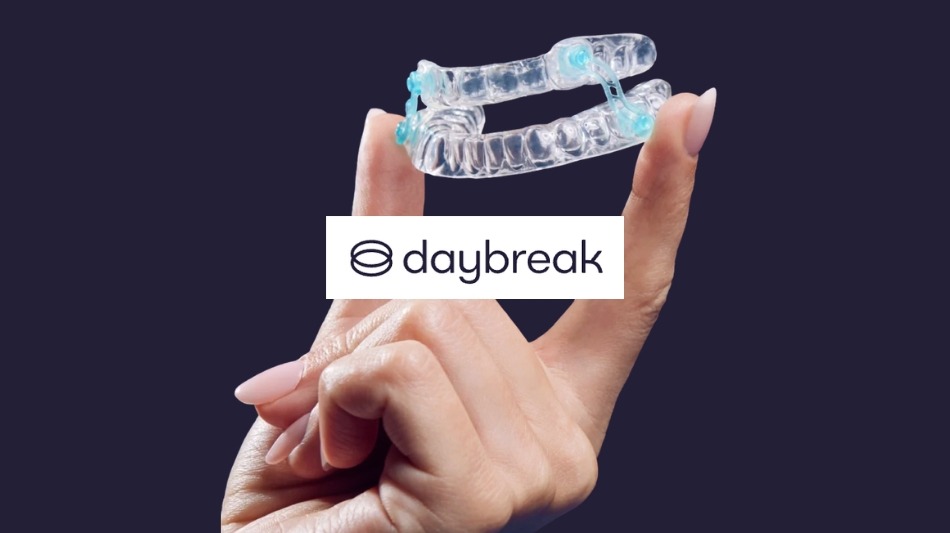
Once your device arrives, the company provides guidance on fitting and adjustment, including a set of advancement bands that let the degree of jaw repositioning be modified as you get used to wearing it.
According to Daybreak's informed consent documentation, the program is intended for patients 22 years of age or older. The affiliated clinical team confirms eligibility during the intake process - confirm your specific eligibility directly with the clinical team.
See the official pricing and coverage information on the Daybreak website
What the Research Shows - Including a January 2026 Cedars-Sinai Affiliated Study on This Specific Care Model
The Daybreak Device is a mandibular advancement device, or MAD - a category of oral sleep appliance with a substantial body of published clinical research behind it. Here's the mechanism in plain terms.
Obstructive sleep apnea occurs when the muscles of the upper airway relax during sleep, allowing the tongue to slide backward, the soft palate to descend, and the airway to narrow or close. A mandibular advancement device works by gently repositioning the lower jaw slightly forward from its resting position during sleep. That forward positioning changes the geometry of the upper airway - holding the base of the tongue away from the posterior throat, maintaining tissue tension, and keeping the passage open for breathing. This is well-established biomechanics, studied for decades.
Two relevant bodies of research deserve attention here.
On MAD therapy broadly: A systematic review published in February 2024 by the American Academy of Otolaryngology-Head and Neck Surgery Foundation analyzed 42 studies involving 2,265 patients and concluded that oral appliances such as mandibular advancement devices are an established treatment approach for obstructive sleep apnea, with candidacy and expected outcomes depending on individual anatomy, severity, and clinical evaluation. Daybreak links to the full PubMed study on their Patient Care Guarantee page. Additionally, published research cited by SleepApnea.org notes that oral appliance therapy carries approximately a 90% compliance rate compared to roughly 50% for CPAP - a clinically meaningful difference when evaluating real-world treatment outcomes.
On this specific care model: According to publicly available coverage in SleepWorld Magazine, a January 2026 Cedars-Sinai-affiliated study evaluated 200 consecutive patients with mild to moderate OSA treated using the Daybreak Device within a standardized, telehealth-guided care system. Patients completed virtual evaluations, received a custom mandibular advancement device adjusted through virtual check-ins, and underwent FDA-cleared home sleep testing before and after treatment. According to that coverage, the study found that patients saw improvement with as little as 1 to 2 mm of mandibular advancement - notably less than the approximately 5 mm required in many previous studies - potentially supporting better tolerance and long-term adherence, with reported outcomes the authors described as comparable to traditional in-person care models. The study design focused on mild and moderate OSA, aligning with current FDA clearance for the device category. Per Daybreak's Dental Director Dr. Peter Balacky, as quoted in SleepWorld, the telehealth-guided approach was described as capable of expanding access while maintaining clinical standards. This study has been described in secondary coverage; readers should review the original publication for full methodology, limitations, and clinical interpretation.
The following notes apply to all research discussed in this section: The 2026 study referenced above was described in secondary coverage in SleepWorld Magazine; readers should review the original publication at cmjpublishers.com for full methodology, limitations, and clinical interpretation. Research on MAD therapy as a category does not guarantee specific results for any individual using the Daybreak Device. CPAP generally produces stronger average AHI reduction and higher oxygen saturation levels when worn consistently - it remains the gold standard for moderate to severe OSA. Results with any treatment vary based on anatomy, severity, degree of advancement, consistency of use, and individual factors. Consult your physician before making any treatment decisions.
Why So Many People Are Exhausted - and Why Snoring Isn't Just Noise
Let's talk directly to the person who isn't sure whether they actually have a problem.
You snore. Your partner mentions it more than you'd like. You wake up tired more often than you should. You've told yourself it's just getting older, or stress, or not sleeping enough hours. You haven't pursued a formal evaluation because the process always seemed like more trouble than it was worth.
Snoring is the acoustic signal of a partially obstructed airway. It's not diagnostic on its own - not all snoring is sleep apnea. But frequent, loud snoring, especially when combined with waking up with a dry mouth, feeling foggy in the morning, or fighting off mid-afternoon fatigue, is a recognized clinical indicator that a formal evaluation is warranted. The evaluation itself is low-stakes. An at-home sleep test followed by physician review is minimally disruptive. The goal is simply to know what's actually happening during your sleep so you can make an informed decision about whether it needs to be addressed.
For women specifically, this deserves emphasis. Research consistently shows that obstructive sleep apnea presents differently in women than in men. Women with OSA are more likely to report insomnia, fatigue, and mood disruption than the classic loud snoring and witnessed breathing pauses more commonly associated with men. This difference in symptom presentation has historically contributed to significant underdiagnosis of OSA in women. Daybreak has published on this topic directly in their resource library. If you're a woman who has been told you're tired because of stress or hormones, and none of those explanations have ever fully sat right, a sleep evaluation belongs on your list.
The point isn't fear. The point is that getting a clear diagnostic picture of what's happening during your sleep is a reasonable, low-friction thing to do - especially now that the evaluation can happen entirely at home.
If You Already Have a CPAP and Can't Use It
This section is for a specific group of readers: people who have been formally diagnosed with obstructive sleep apnea, have a CPAP prescription, and have largely given up on using it.
You're not alone. CPAP non-adherence is one of the most well-documented challenges in sleep medicine. Research cited by SleepApnea.org puts CPAP compliance at roughly 50% - meaning a substantial portion of patients who are prescribed it stop using it consistently. The mask is uncomfortable. The hose is disruptive. The noise bothers a partner. Traveling with the machine is a logistical headache. At some point, the nightly fight to use equipment that doesn't work for your body stops feeling worth it.
The clinical consequence is that your condition goes untreated despite a prescription technically existing.
Clinical guidelines from the American Academy of Sleep Medicine and the American Academy of Dental Sleep Medicine explicitly support custom oral appliance therapy as a recognized alternative for patients who cannot tolerate CPAP or who prefer an alternate therapy. This is an evidence-supported clinical pathway - not experimental, not fringe. The barrier for most people is access: finding a dentist trained in oral appliance therapy, navigating insurance for a device category that straddles medical and dental coverage, and completing the impression process. Daybreak's telehealth model is specifically designed to reduce those barriers.
If you already have a sleep apnea diagnosis, you don't need to repeat the sleep test through Daybreak. According to their FAQ, you can enter the program at the device evaluation stage by providing information about your existing diagnosis. You can also submit your insurance information through the Daybreak website for a free coverage check before committing to anything.
Who the Daybreak Program May Be Right For
Daybreak May Align Well With People Who:
Have undiagnosed symptoms and want answers without a sleep lab visit. Loud or frequent snoring, waking up gasping or choking, persistent daytime fatigue, morning headaches, and difficulty concentrating are all recognized indicators of obstructive sleep apnea. If you've been putting off a formal evaluation because of the logistics involved, the at-home pathway is a low-friction way to find out what's actually happening.
Have an existing CPAP prescription they can't tolerate. If you were diagnosed, gave CPAP a genuine effort, and cannot stay consistent with it - because of the mask, the noise, the claustrophobia, or the travel impracticality - an oral appliance is a clinically recognized alternative. Daybreak provides a direct route to that evaluation without requiring an in-person dental visit or navigating oral appliance therapy independently.
Travel regularly and need a treatment that fits their lifestyle. A CPAP machine requires power, often requires distilled water, and takes real packing space. A custom MAD fits in a small case with no power requirements. For anyone whose work or life involves frequent travel, that portability difference is the practical difference between a treatment they can sustain and one they can't.
Have mild to moderate OSA and want a treatment option supported by published guidelines. The 2024 systematic review cited on Daybreak's guarantee page - analyzing 42 studies and 2,265 patients - supports custom oral appliances as an established treatment approach for mild-to-moderate OSA. According to publicly available secondary coverage in SleepWorld Magazine, a January 2026 Cedars-Sinai-affiliated study also evaluated this specific telehealth-guided care model in a real-world patient population. Both support the clinical foundation of what Daybreak offers, subject to individual clinician evaluation and independent review of the full study.
Want to manage the entire process from home. The complete Daybreak pathway - sleep test, clinical review, dental impression, device production, delivery - is designed to happen without in-person clinical visits. If distance from specialists, scheduling constraints, or a preference for home-based care are factors, the at-home model addresses those barriers directly.
Have a partner whose sleep is being disrupted. Snoring is often the thing that finally pushes someone toward evaluation. If your bed partner is sleeping poorly because of you - or if you've reached the point of separate bedrooms - that's a quality-of-life issue with a potentially addressable clinical cause. Getting a diagnostic picture of what's driving it is the right first step.
Other Options May Be Preferable For People Who:
Have severe OSA. For severe cases, CPAP remains the most studied and typically preferred treatment modality, and the telehealth intake process may not be sufficient for the clinical complexity involved. A board-certified sleep medicine physician and potentially an in-person evaluation are the appropriate standards here.
Have significant dental conditions, active TMJ issues, or severe periodontal disease. Daybreak's informed consent documentation notes that mandibular advancement devices can cause or worsen temporomandibular joint dysfunction and are not appropriate for certain dental and jaw conditions. The consent specifically lists loose teeth, significant missing teeth, severe gum disease, recent oral surgery, active TMJ pain, and current orthodontic treatment among conditions that may affect eligibility. If any of these apply, speak with your dentist and physician before pursuing any oral appliance program.
Are enrolled in Medicare, Medicaid, TRICARE, or other government health plans. Per Daybreak's Government Health Plan Disclosure page on the official website, their services and devices are not covered by and will not be billed to any federal or state government health insurance program, including Medicare, Medicare Advantage, Medicaid, and TRICARE. If you're on a government plan, all costs are self-pay. With the device starting at $2,495 according to the company's pricing page, that's a material factor to account for before enrolling.
Have serious cardiovascular, pulmonary, or neuromuscular conditions. Daybreak's informed consent lists serious heart or lung disease, prior stroke, pacemaker use, and certain neuromuscular conditions as factors that may make the at-home testing pathway clinically inappropriate. These patients are better served by in-person evaluation with a sleep specialist.
Prefer comprehensive in-person medical oversight. Telehealth models work well for many patients and many situations. They don't work for every clinical scenario or every personal preference. If you'd feel more confident with a face-to-face evaluation by a board-certified sleep medicine physician who can examine you directly, that preference is clinically sound and should be honored.
Questions Worth Asking Yourself Before Enrolling
Your answers to these questions help determine which approach may make the most sense for your specific situation:
Have you talked to your primary care physician about your sleep symptoms? That's a reasonable first step regardless of which treatment path you ultimately choose. If you already have a diagnosis, what severity level was documented? Mild and moderate are the populations for whom the clinical evidence base for MAD therapy is strongest. Do you have existing TMJ issues, significant tooth loosening, active periodontal disease, or major dental work currently in progress? Any of those deserve a dentist conversation before starting oral appliance therapy. Are you on Medicare, Medicaid, Medicare Advantage, or TRICARE? If so, the government plan exclusion is a real cost consideration. Have you read through the Patient Care Guarantee terms and the Return Policy separately? They're different documents with different conditions - both are worth reviewing before you commit.
Pricing, Insurance, and What to Expect on Cost
At-Home Sleep Test: Current pricing is listed at thedaybreak.com and may change over time - verify the current amount directly before ordering. According to the company's website, the sleep test is FSA and HSA eligible.
The Daybreak Device: According to Daybreak's pricing page, the device starts at $2,495 for cash-pay patients as of early 2026. Verify current pricing directly on the official website before making any purchasing decisions.
Insurance: According to the Daybreak website, the company states it works with most major insurance providers - including Cigna, United Healthcare, Aetna, Blue Cross Blue Shield, Oscar, and Emblem Health - and offers a free coverage check. Their insurance team will verify your specific benefits and provide an estimate of your deductible and coinsurance exposure. Coverage determination depends on your specific policy, your clinical results, and your medical history. Coverage varies by plan; always confirm benefits directly with your insurer.
Government plans - important note: Per Daybreak's Government Health Plan Disclosure page on the official website, their services and devices are not covered by and will not be billed to any federal or state government health insurance program, including Medicare, Medicare Advantage, Medicaid, or TRICARE. If you're enrolled in any of those plans, everything is self-pay. Confirm your coverage situation directly with the Daybreak insurance team before enrolling.
Financing: According to the pricing page, Daybreak offers financing through CareCredit (described as no interest if paid in full within six months for qualified applicants) and HFD (with payments described as low as $89 per month, with the company stating nearly 100% approval and no impact to your credit score for pre-qualification). The pricing page also displays a starting point of approximately $76 per month. Verify current financing terms and eligibility directly on the official website, as terms are subject to change and credit approval.
See the official pricing and coverage information on the Daybreak website
The Patient Care Guarantee - What It Actually Covers
The Patient Care Guarantee is worth understanding in full before you enroll, not after. Here's what it actually says, based on the terms published on Daybreak's Patient Care Guarantee page.
The guarantee covers patients diagnosed with clinical obstructive sleep apnea by a Daybreak-affiliated physician who pursue treatment with the Daybreak Device. If, within the first 90 days of receiving your customized device, you do not achieve either a 50% or greater reduction in your measured AHI or RDI from your baseline, or a score reduced to below 5, and you have fully followed and completed the clinical treatment plan, Daybreak will provide a full refund of the medical device cost of your initial device purchase.
What is not refundable even if the guarantee applies: Per the guarantee terms, dental services fees and medical services fees are required services fees and are nonrefundable. The guarantee covers the device cost specifically.
What can void the guarantee: Failure to follow the clinical treatment plan, failure to wear the device consistently each night, failure to complete required check-ins and follow-up sleep tests within the specified timeframes, damage from misuse or carelessness, or purchasing from an unauthorized seller.
The Return Policy and the Patient Care Guarantee are separate documents with separate conditions. The custom device is generally non-refundable outside the guarantee because it's a prescription medical device made specifically for your dental anatomy. The return policy specifies that the At-Home Impression Kit must be unused and unopened to qualify for a return of the Daybreak Sleep System. If the affiliated clinical team determines after review that you're not a qualified candidate for the device, you receive a full refund for the Daybreak Sleep System purchase.
Read both documents in their current form on the official Daybreak website before enrolling. Contact the Daybreak support team directly with any specific questions about how the guarantee and return policy apply to your situation.
How the Daybreak Device Compares to the Other Options
All options below are discussed in terms of how they may address the symptoms of obstructive sleep apnea and snoring - not as cures for underlying medical conditions. Individual results vary based on severity, anatomy, adherence, and many other factors.
Custom MAD via Daybreak versus CPAP. CPAP is the most studied treatment for OSA and produces the strongest average AHI reduction and highest oxygen saturation when worn consistently. It's the gold standard for moderate to severe OSA and the appropriate first-line standard for those cases. The clinical trade-off is adherence: published research puts CPAP compliance at roughly 50%, meaning a substantial portion of patients prescribed CPAP stop using it consistently - which means the condition continues untreated regardless of the prescription. For patients who cannot sustain CPAP use, a custom MAD is a clinically recognized alternative to discuss with a clinician.
Custom MAD versus over-the-counter boil-and-bite devices. OTC snoring mouthpieces are available without a prescription and are substantially cheaper. They use a self-molding approach that approximates dental anatomy rather than replicating it precisely. According to Daybreak's own FAQ, patients who compare boil-and-bite mouthguards against custom oral devices frequently find the OTC options uncomfortable, bulky, and less effective. The clinical literature consistently favors custom fabrication for both comfort and clinical positioning.
Daybreak versus getting a custom MAD through a dentist's office. The clinical product is the same category - a custom mandibular advancement device. The difference is the access pathway. Getting a custom MAD through a dental office requires finding a dentist trained in oral appliance therapy, scheduling multiple in-person appointments, and often navigating dental rather than medical insurance coverage. Daybreak's telehealth model handles diagnosis, medical insurance coordination, and the impression process at home. For patients facing access barriers or who prefer a home-based pathway, Daybreak removes friction from the same fundamental treatment.
Custom MAD versus Inspire therapy. Inspire is a surgically implanted device that stimulates the hypoglossal nerve to maintain airway muscle tone during sleep. It produces strong outcomes for moderate to severe OSA patients who have failed CPAP and meet specific anatomical criteria. It also involves general anesthesia, surgical implantation, and a recovery period. For patients with mild to moderate OSA looking for a non-invasive first step, a custom MAD is considerably less intensive. These are not comparable interventions - they serve different severity levels and patient situations.
Safety: What to Understand Before You Start
This is a high-level overview only. It does not replace the Daybreak Informed Consent document or the guidance of your prescribing clinician. This information is not a replacement for prescribed medical treatment. Do not adjust or discontinue existing treatments without your physician's guidance and approval.
Side effects documented in Daybreak's informed consent include discomfort or pain in the teeth, jaws, and surrounding structures; dry mouth; increased salivation; increased risk of dental decay and periodontal disease; loosening of crowns, fillings, or teeth; tooth movement; bite or occlusal changes that could be permanent; jaw or joint pain; and the possibility of causing or worsening temporomandibular joint dysfunction. In some patients, discoloration or white spots on teeth may occur with extended use. These are clinically documented outcomes - not just legal disclosure language - and they should be fully understood before proceeding.
The adjustment period. According to Daybreak's FAQ, some patients continue to experience snoring in the early weeks of use as soft tissues take time to respond to the repositioning effect. Initial jaw soreness and mild discomfort are common as the musculature adjusts. The advancement bands allow the degree of jaw repositioning to be modified over time.
Dental monitoring matters. Because long-term MAD therapy can produce changes in bite alignment and tooth position, maintaining communication with your own dentist - not just the Daybreak clinical team - is important if you intend to use the device long-term.
Pregnancy. Daybreak's informed consent documentation states that women who are or may become pregnant should obtain authorization from their treating physician before starting or continuing treatment.
When to stop and get clinical guidance. If you experience significant jaw pain, meaningful bite changes, unusual tooth loosening, or other concerning symptoms after starting MAD therapy, contact your prescribing clinician and your personal dentist. Do not continue use if side effects are progressing without clinical guidance.
How to Get Started
The process is designed to happen entirely from home. There are two entry points depending on where you are in the diagnostic journey.
If you haven't been diagnosed yet: Start with the At-Home Sleep Test. Create a patient account, order the test online, receive the sensor device by mail, wear it in your own bed, and the data transmits automatically to the affiliated clinical team for physician review and diagnosis. Confirm the current testing protocol directly with Daybreak before ordering.
If you already have a sleep apnea diagnosis: You can enter the program at the device evaluation stage without repeating the sleep test, depending on your diagnostic history. According to Daybreak's FAQ, information about your existing diagnosis including timing will be needed. Submitting your insurance information for a free coverage check early in the process is recommended so you understand your out-of-pocket exposure before committing.
Contact Information
Ask your questions before you order. According to the company's website, the Daybreak support team can be reached at:
Phone: +1 (844) 310-7700
Email:support@thedaybreak.com
Official website: thedaybreak.com
View current Daybreak program details on the official website
How Is the Daybreak Program Structured? A Final Assessment
Several factors explain why some patients consider the Daybreak program.
The underlying treatment - custom mandibular advancement device therapy for mild to moderate OSA - is supported by published research. Daybreak cites a 2024 systematic review of over 2,000 patients on their own guarantee page as the clinical foundation. According to publicly available secondary coverage in SleepWorld Magazine, a January 2026 Cedars-Sinai-affiliated study evaluated this telehealth-guided care model in 200 real-world patients with mild to moderate OSA, with reported outcomes the authors described as comparable to traditional in-person care. According to the company, the device carries FDA clearance. The at-home model is designed to reduce the logistical barriers that cause a large proportion of people with sleep apnea to never get diagnosed or to give up on treatment. And the insurance coordination offered by Daybreak's team, if it works out for your specific plan, can substantially reduce the out-of-pocket cost from the $2,495 cash-pay starting point.
The considerations to weigh honestly:
Daybreak is not appropriate for everyone. Government plan enrollees pay out of pocket entirely, which is a real barrier. The device is not refundable outside the Patient Care Guarantee once fabrication starts - and the dental and medical service fees are not refundable even under the guarantee. Side effects associated with MAD therapy, including the potential for permanent bite changes with long-term use, are real and documented in the company's own informed consent. The clinical appropriateness of a telehealth intake pathway depends on your OSA severity and overall medical picture, and someone with severe OSA or complex comorbidities may need more comprehensive in-person evaluation.
For some patients with mild to moderate OSA, or for those who cannot stay consistent with CPAP, Daybreak may offer a more accessible at-home pathway to evaluation and oral appliance treatment, subject to clinician review. Whether it is the right fit depends on diagnosis, severity, dental health, insurance status, and the judgment of the evaluating clinician.
Important Note: Because this program involves telehealth services, insurance processing, and a prescription medical device, readers should verify the current eligibility, billing, and clinical terms directly with Daybreak before making any decision. Always consult your physician before beginning or changing any sleep apnea treatment.
Read the current eligibility and guarantee terms on the official Daybreak website
Frequently Asked Questions
How is the Daybreak program structured?
Daybreak (Sleepcare LLC) is a telehealth platform that connects patients with independent licensed clinicians affiliated with Beluga Health-associated professional corporations. It is not itself a healthcare provider. The program offers an at-home sleep test, physician review and diagnosis, and - if you're eligible - a custom-fabricated prescription mandibular advancement device. The platform handles insurance coordination and customer support; clinical decisions are made entirely by the affiliated independent clinicians, not by the platform itself.
Is the Daybreak Device FDA-cleared?
According to the company, the Daybreak Device is FDA-cleared. For this category - intraoral devices for snoring and obstructive sleep apnea - FDA clearance, not drug-style approval, is the relevant regulatory pathway. FDA clearance means the agency reviewed the device and determined it is substantially equivalent to a legally marketed predicate device. It does not guarantee individual outcomes.
Does Daybreak accept insurance?
According to Daybreak's website, the company states it works with most major insurance providers and offers a free coverage check. Coverage depends on your specific policy, clinical results, and medical history. Per Daybreak's Government Health Plan Disclosure page, services are not covered by or billed to Medicare, Medicare Advantage, Medicaid, TRICARE, or other government health plans. Always confirm your specific coverage directly with your insurer and with the Daybreak team before enrolling.
Can I use Daybreak if I already have a CPAP diagnosis?
Yes. If you have an existing sleep apnea diagnosis and are looking for an alternative to CPAP, you can enter the program at the device evaluation stage without repeating the sleep test. Per Daybreak's FAQ, information about your existing diagnosis including timing will be needed. The clinical team determines whether the Daybreak Device is appropriate for your specific case.
How long does it take to receive the Daybreak Device?
According to Daybreak's FAQ, fabrication and shipping typically take about two to three weeks after completed impressions are received. The full timeline from ordering the sleep test to receiving the device depends on how quickly each step is completed.
What exactly does the Patient Care Guarantee cover?
Per the terms on Daybreak's Patient Care Guarantee page: if you don't achieve at least a 50% reduction in your AHI or RDI from baseline, or a score reduced to below 5, within the first 90 days of receiving your device - and you have followed the complete clinical treatment plan - Daybreak will refund the medical device cost of your initial purchase. Dental and medical services fees are nonrefundable under the guarantee terms. Read the full current terms on the official website before enrolling.
Is the Daybreak Device the same as an over-the-counter snoring mouthpiece?
No. The Daybreak Device is a custom-fabricated prescription mandibular advancement device made from dental impressions of your specific anatomy. Over-the-counter boil-and-bite devices are self-molded generic products. According to Daybreak's FAQ, patients who compare boil-and-bite mouthguards against custom devices frequently find the OTC options uncomfortable and less effective. If you've tried a drugstore mouthpiece and found it intolerable or ineffective, a custom prescription device is a meaningfully different product.
What are the documented risks and side effects?
Potential side effects documented in Daybreak's informed consent include jaw soreness, tooth discomfort, dry mouth, increased salivation, and - with long-term use - bite changes and potential temporomandibular joint effects that may be permanent. Review the full Daybreak Informed Consent on the official website before proceeding. Discuss any pre-existing dental or jaw conditions with your dentist and physician before starting.
Does Daybreak serve patients on Medicare or Medicaid?
Per Daybreak's Government Health Plan Disclosure page on the official website, their services and devices are not covered by and will not be billed to Medicare, Medicare Advantage, Medicaid, TRICARE, or similar government health plans. Patients on these plans who wish to enroll do so on a completely self-pay basis.
What did the 2026 study covered in SleepWorld Magazine find about the Daybreak care model?
According to publicly available secondary coverage in SleepWorld Magazine, a January 2026 Cedars-Sinai-affiliated study evaluated 200 consecutive patients with mild to moderate OSA treated using the Daybreak Device within a standardized, telehealth-guided care system. Per that coverage, the study found improvement with as little as 1 to 2 mm of mandibular advancement - less than the approximately 5 mm required in many prior studies - with reported outcomes the authors described as comparable to traditional in-person care models. The study design focused on mild and moderate OSA, aligning with current FDA clearance for the device category. This study has been described in secondary coverage; readers should review the original publication at cmjpublishers.com for complete methodology, limitations, and clinical interpretation.
View current Daybreak program information on the official website
Disclaimers
Content and Medical Disclaimer: This article is for informational purposes only and is not a substitute for professional medical advice, diagnosis, or treatment. The information presented describes the Daybreak platform and device based on publicly available materials from the official Daybreak website, published clinical literature on mandibular advancement device therapy, and publicly available secondary coverage of a January 2026 Cedars-Sinai-affiliated study in SleepWorld Magazine. The Daybreak Device is a prescription medical device requiring evaluation by a licensed clinician. Descriptions of potential benefits are not guarantees and do not substitute for an individualized medical evaluation. Nothing in this article replaces the professional judgment of your healthcare provider.
Professional Medical Disclaimer: This article is educational and does not constitute medical advice. If you are currently taking medications, have existing health conditions - including cardiovascular conditions, TMJ disorders, significant periodontal disease, or neuromuscular conditions - are pregnant or nursing, or are considering any changes to your current sleep apnea treatment, consult your physician before enrolling in the Daybreak program or pursuing any new treatment. Do not change, adjust, or discontinue any existing prescribed treatments without your physician's guidance and approval.
Medical Device Notice: The Daybreak Device is described by the company as an FDA-cleared prescription mandibular advancement device for snoring and obstructive sleep apnea in eligible adults. FDA clearance indicates regulatory review for substantial equivalence to a predicate device; it does not guarantee individual outcomes. Per the company's Terms of Use, Daybreak (Sleepcare LLC) is not a healthcare provider. All clinical decisions are made by independent licensed clinicians affiliated with Beluga Health-associated professional corporations, not by the platform itself.
Results May Vary: Individual outcomes with mandibular advancement device therapy vary based on OSA severity, dental anatomy, degree of jaw advancement, consistency of nightly use, comorbid conditions, and other individual factors. Not all patients will achieve clinically significant AHI reduction. Monitor outcomes with appropriate clinical follow-up and maintain communication with your physician throughout treatment.
Insurance Coverage Note: According to the company, Daybreak states it works with most major medical insurance providers and offers a free coverage check. Coverage depends on your specific policy, clinical results, and deductible status. Per Daybreak's Government Health Plan Disclosure page on the official website, their services and devices are not billable to Medicare, Medicare Advantage, Medicaid, TRICARE, or similar government plans. Always confirm benefits directly with your insurer. FSA and HSA accounts may be applicable; confirm with your plan administrator.
FTC Affiliate Disclosure: This article contains affiliate links. A commission may be earned if you enroll or purchase through these links, at no additional cost to you. This compensation does not influence the accuracy, neutrality, or integrity of the information presented. All descriptions are based on publicly available information from the official Daybreak website and published clinical literature.
Pricing Disclaimer: All prices mentioned were based on publicly available information at thedaybreak.com at the time of publication (March 2026) and are subject to change without notice. Always verify current pricing, insurance terms, guarantee conditions, and return policy details directly on the official Daybreak website before making any purchasing decisions. Official website: thedaybreak.com
Publisher Responsibility Disclaimer: The publisher of this article has made every effort to ensure accuracy at the time of publication based on publicly available information. We do not accept responsibility for errors, omissions, or outcomes resulting from the use of the information provided. Readers are encouraged to verify all details directly with Daybreak and their healthcare provider before making decisions.
SOURCE: Daybreak
Source: Daybreak