TMates GLP-1 2026: Compounded Semaglutide ($249/mo) vs. Tirzepatide ($297/mo) - Pricing, FDA Status, and What to Know Before Enrolling
A 2026 Informational Overview of the TMates Telehealth Weight Loss Program, Compounded GLP-1 Medication Formats, Weekly Injection Pricing, Independent Clinician Review Process, Refund Terms, and What Consumers Should Verify With a Licensed Provider Before Enrolling
MIAMI, FL, March 4, 2026 (Newswire.com) - This content is for informational purposes only. It does not constitute medical advice, does not recommend or endorse any specific prescription drug, and does not substitute for an evaluation by a licensed healthcare provider. Eligibility and prescribing decisions are made solely by a licensed clinician - no article can do that for you. A commission may be earned if you take action through links in this article. Compounded medications discussed here are not FDA-approved finished products - that distinction is explained in full below. Verify all medical, pricing, and availability information directly with TMates and a licensed clinician before making any decision.
TMates GLP-1 Program 2026: Semaglutide ($249/mo) vs. Tirzepatide ($297/mo) - Pricing, Process, and Key Questions to Ask Before Enrolling
You've seen the ads. You've probably spent more time than you'd like comparing telehealth GLP-1 platforms, reading vague overviews that either read like a press release or scare you away from anything that isn't a hospital visit. Neither extreme is useful when you're trying to make an actual decision.
This overview is written for the person who wants the complete picture - not a sales pitch, not a warning label, but the kind of clear, accurate information that lets you walk into a clinician consultation knowing exactly what to ask and what to expect. It covers what TMates actually is and how it's structured, what semaglutide and tirzepatide do differently at the ingredient level, what the peer-reviewed research actually shows, what the pricing and refund terms mean for your financial risk, and the specific questions worth asking before your first dose.
If that's what you came for, keep reading.
View the current TMates offer (official TMates page)
Who's Actually Running This: The Three-Entity Structure That Changes Everything
Most people evaluating a telehealth program think of it as one company. In practice, there are three distinct parties involved - and knowing who does what protects you at every stage of the process.
TMates LLC is the technology platform. According to the company's own terms of use, TMates is "an online licensed technology platform" that facilitates connections between members, treating providers, and pharmacies. The terms are explicit: TMates does not practice medicine and does not interfere with the practice of medicine. It manages the infrastructure, the intake process, customer support, and the overall experience - but clinical decisions are not its domain.
Independent Licensed Treating Providers are the healthcare professionals who review your health information and decide whether to prescribe. Per the terms of use, each treating provider is "solely responsible for all Services he or she provides" and holds "complete authority, responsibility, supervision, and control over the provision of all medical services." That language matters: no prescription is guaranteed by the platform. The call belongs entirely to the evaluating clinician, based on your individual health profile.
Partner Pharmacies are the licensed U.S. pharmacies that receive the prescription, prepare the medication, and ship it to you. According to TMates' website, the company may offer compounded medications from registered U.S. pharmacies operating under applicable compounding standards.
Three entities, three distinct roles. Technology platform, independent clinician, licensed pharmacy. Understanding that upfront means no surprises about who's responsible for what at each stage - and it means you know exactly who to contact if anything needs clarification.
What TMates Offers and How the Program Is Positioned
TMates describes itself as a telehealth platform and online pharmacy designed to make healthcare more affordable and accessible, with a focus on medically supervised weight loss. The program centers on GLP-1 medications - primarily semaglutide and tirzepatide - delivered through a fully digital process that includes telehealth consultations with independent licensed providers, nutrition and exercise coaching, and home delivery of medication.
According to the company's website, the platform provides access to licensed doctors across all 50 states, Puerto Rico, and some other U.S. territories. The site describes the experience as "personalized care, tailored to your body's unique needs" with "discreet care, anywhere - no in-person doctor visit required." For people in areas with limited access to obesity medicine specialists, or who simply prefer to handle something this personal without waiting rooms, that accessibility is the core value proposition. For a broader overview of the TMates platform and its full range of GLP-1 medication offerings, see this informational overview of the TMates GLP-1 weight loss program.
On insurance: the tmates.com homepage states "No Insurance required." If you'd like to explore whether your health plan might reimburse telehealth or prescription costs, confirm that directly during intake or with your insurer before assuming anything either way.
View the current TMates offer (official TMates page)
The FDA and Compounding: The Most Important Thing to Understand Before You Do Anything Else
If you read only one section carefully before making any decision about a compounded GLP-1 program, make it this one.
TMates' own website discloses that compounded medications from partner pharmacies "are not evaluated by the FDA for safety, quality or efficacy." Those are their words, and they're accurate. Here's what they mean in practice.
Compounded medications are not FDA-approved finished drug products. They're prepared by licensed pharmacies on a per-patient basis, using active pharmaceutical ingredients, under the direction of a prescribing clinician. The FDA's drug approval process involves clinical trials that evaluate safety and efficacy as finished products - compounded preparations don't go through that pathway. That's not a criticism of compounding pharmacies; it's simply an accurate description of two different regulatory categories.
This distinction matters because it puts compounded semaglutide and tirzepatide in a fundamentally different category than FDA-approved branded medications like Wegovy® or Ozempic® (semaglutide) or Zepbound® (tirzepatide). TMates states this directly: "Wegovy® is a registered trademark of Novo Nordisk. TMates is not affiliated with, endorsed by, or sponsored by Novo Nordisk. Zepbound® is a registered trademark of Eli Lilly and Company. TMates is not affiliated with, endorsed by, or sponsored by Eli Lilly."
TMates' Products page states, "All medications are FDA-approved," and also states that TMates may offer compounded medications from registered U.S. pharmacies and that compounded medications "are not evaluated by the FDA for safety, quality or efficacy." Before you pay, ask the treating provider whether your prescription will be for an FDA-approved product or a compounded preparation, and confirm which pharmacy will dispense it.
Two additional things to verify before your first dose: compounded medications can differ from branded products in concentration, inactive ingredients, and dosing instructions depending on the specific pharmacy. And the FDA has specifically warned about dosing errors with compounded injectable semaglutide - including dangerous confusion between milligrams, milliliters, and "units." How your prescription is written and measured is a concrete safety question worth raising with your clinician before you ever open the package.
Semaglutide vs. Tirzepatide: What the Peer-Reviewed Research Actually Shows
This is the question that brings most people to an article like this - and it's also the one where most articles either oversimplify or make claims they can't support. Here's the clean version: what the research shows, in what context, and what it doesn't tell you.
Semaglutide: How It Works
Semaglutide is a GLP-1 receptor agonist. Your body naturally produces GLP-1, a hormone released after eating that signals satiety to your brain, slows gastric emptying so food moves through your digestive system more gradually, and helps regulate insulin secretion. Semaglutide mimics that hormone at therapeutic concentrations, amplifying both the fullness signal and the metabolic effects.
In the STEP clinical trial program - which studied FDA-approved semaglutide 2.4 mg for weight management in controlled research settings - participants experienced meaningful average reductions in body weight over the study period. These results apply to the specific FDA-approved finished product studied under controlled conditions. They don't describe compounded preparations, and they don't predict what any individual will experience. Responses varied significantly even within those trials, which is worth holding onto whenever you see a single number used to describe what GLP-1 medications "do."
The side effect profile documented in clinical literature: nausea, vomiting, diarrhea, and constipation are the most common, appearing most frequently during early treatment and dose escalation phases. Many people find them manageable with gradual titration. GLP-1 medications as a class also carry boxed warnings regarding thyroid C-cell tumors and have been associated with pancreatitis. These aren't reasons to avoid the conversation - they're reasons to have it with a clinician who knows your full history.
Tirzepatide: The Dual-Receptor Difference
Tirzepatide is a dual agonist - it activates both GLP-1 receptors and GIP (glucose-dependent insulinotropic polypeptide) receptors simultaneously. GIP is a separate incretin hormone involved in energy metabolism and fat storage pathways. That dual-receptor mechanism is what pharmacologically distinguishes tirzepatide from semaglutide, and it's the reason these two medications tend to show different outcomes in head-to-head research.
The most direct comparison comes from SURMOUNT-5, a Phase 3b trial published in the New England Journal of Medicine in May 2025. The study randomized 751 adults with obesity but without type 2 diabetes to receive either the maximum tolerated dose of tirzepatide or the maximum tolerated dose of semaglutide once weekly for 72 weeks. At week 72, the tirzepatide group achieved a mean weight reduction of 20.2% versus 13.7% in the semaglutide group. Participants in the tirzepatide group were also more likely to achieve weight reductions of 10%, 15%, 20%, and 25% or more. Waist circumference reductions followed a similar pattern.
That's meaningful data - and it needs meaningful context. These results come from a trial of FDA-approved finished products in a specific population under controlled research conditions. They do not describe compounded medications. They do not predict what any individual will experience. Individual responses varied significantly within both groups. The best outcome data in the world tells you about population averages, not about your specific biology, history, or circumstances. That picture only comes from a licensed clinician reviewing your actual case.
The side effect profile for tirzepatide is broadly similar to semaglutide - primarily gastrointestinal effects during dose escalation, injection site reactions, and the same thyroid and pancreatitis class-level considerations. Both medications require a thorough evaluation of contraindications and current medications before any prescription is appropriate.
So Which One Is Actually Right for You?
That's a clinical question, not something this article can answer - and you should be skeptical of any source that claims otherwise. What you now have is enough research context to walk into a clinician consultation as an informed participant rather than a passive recipient. Bring the SURMOUNT-5 data if it's useful. Ask which formulation, in their clinical judgment, makes more sense for your profile. Let the prescriber do their job with your complete picture in front of them.
TMates Pricing and Refund Terms: The Numbers, the Fine Print, and What to Confirm Before You Click Submit
Understanding exactly what you're paying - and precisely what happens to that money - before you commit is not optional. Here's what's publicly available.
As of March 4, 2026, TMates lists semaglutide at $249/month and tirzepatide at $297/month on its Products page. Both are listed as weekly injections. Pricing is subject to change at any time; always confirm the current total and what's included - medication, provider consultations, coaching, and shipping - at checkout before you pay. Per the company's terms of use, TMates may modify pricing prior to billing.
TMates markets the program with "no waitlist," "no hidden fees," and "no extra costs" language. According to the company's published materials, medication is described as delivered with "an uninterrupted supply of medication, with no extra costs." Before committing to any plan, confirm exactly what that means for your specific situation - refills, clinical follow-up frequency, shipping costs, and what triggers any additional charges. Ask during checkout, not after.
The refund structure is the most important thing to understand before you pay anything. Per TMates Terms of Use: if you pay before the medical team has reviewed your history, a full refund is available. If the team reviews your case and determines you don't qualify, a full refund is available. Once a prescription is written and transmitted to a pharmacy, the refund window closes - no refund is available from that point forward. The financial commitment is final the moment that prescription is transmitted. Read those terms at checkout. Don't find out about this structure after the fact.
View the current TMates offer (official TMates page)
How the Process Works, From First Click to Delivery
According to TMates' published materials, here's what the experience looks like in sequence.
Step 1 - Choose your plan. Browse the TMates Products page and select the medication you're interested in. As noted above, both semaglutide and tirzepatide are currently listed as weekly injections. Confirm current availability at checkout - options can vary based on prescriber determination and current supply conditions.
Step 2 - Complete the 90-second assessment quiz. The company describes this as an instant pre-approval step based on basic health information. This is a platform-level intake screen - the actual clinical review happens separately, with an independent licensed treating provider who evaluates your full health history.
Step 3 - Independent medical review. A licensed treating provider reviews your submitted health information and makes the clinical determination. No prescription is guaranteed at this stage. If the provider determines you don't qualify, a full refund is available under the published terms.
Step 4 - Medication shipped to your door. If a prescription is issued, the partner pharmacy compounds and ships your medication. Per the company's marketing, delivery is designed to include an "uninterrupted supply." Confirm what that means for your specific plan, including how refills are handled and whether any action is required on your end to maintain continuity.
Questions to Ask the Clinician Before Your First Dose
Going into a telehealth consultation without prepared questions is leaving value on the table. Here are the ones that matter most - and the answers should all be specific, not vague.
First, ask directly: is this prescription for an FDA-approved product or a compounded preparation, and which pharmacy will dispense it? You want a specific answer, not a general one. Second, ask about dosing measurement. The FDA has specifically warned about dosing errors with compounded injectable semaglutide involving dangerous confusion between milligrams, milliliters, and "units" - knowing which unit system your prescription uses is a concrete safety question with a concrete answer. Third, ask about the titration schedule: how your dose will increase over time, at what intervals, and what the plan is if you experience significant side effects during escalation. Fourth, ask what's included in your monthly cost and exactly what would trigger an additional charge. Fifth, ask how often you'll have a provider check-in and what the monitoring protocol looks like over the first 90 days. Sixth, ask which pharmacy is compounding your medication and confirm it holds a current license. And seventh, ask what the discontinuation process looks like - what happens to your prescription and any remaining supply if you decide to stop.
A program operating within appropriate clinical and regulatory standards should answer every one of these questions clearly and without hesitation. That clarity is itself a data point.
Is TMates Right for You? An Honest Look at Both Sides
People who tend to find the TMates model a strong fit:
Those who have already decided telehealth GLP-1 access is the right path and are now comparing platforms on price, process, and support quality. If you understand what compounded medications are, have confirmed the pricing and refund structure work for your situation, and want a digital-first experience with home delivery, TMates' model is purpose-built for that use case.
Those who value accessibility, speed, and privacy. No waiting rooms. No scheduling weeks out. No need to discuss something this personal face-to-face if that's not your preference. For people in areas with limited specialist access - or who simply value the control that comes with managing healthcare from home - this model addresses a genuine gap.
Those who are comfortable as self-pay or have confirmed reimbursement potential and are prepared to work within the published monthly pricing structure. At $249/month for semaglutide and $297/month for tirzepatide (as listed on TMates' Products page as of March 4, 2026), the program is positioned as a cash-pay option; consumers should compare total monthly costs and what's included against other care pathways, including branded prescriptions, based on their own insurance and eligibility.
People who may be better served by a different option:
Those who have been specifically prescribed a branded FDA-approved GLP-1 medication by a clinician who knows their history. Compounded semaglutide and tirzepatide are not the same product as Wegovy, Ozempic, Zepbound, or Mounjaro. If your doctor has recommended a specific branded formulation for documented medical reasons, that clinical relationship and that specific recommendation deserve to be respected.
Those whose health history requires close in-person monitoring. Telehealth is appropriate and effective for a wide range of clinical situations - but not every situation. If your history involves conditions where physical examination, in-person lab work, or specialist oversight is part of the standard of care, a traditional clinical relationship may serve you better than a fully digital model.
Those who need full financial flexibility. Once a prescription is transmitted, the refund window is closed under the current terms. If that structure creates financial exposure you're not comfortable with - especially if your eligibility is uncertain - verify whether the terms have changed, or explore programs with different refund structures before committing.
The Regulatory Landscape: What Every Informed Consumer Should Know Right Now
This section isn't alarmist. It's the context every thoughtful person evaluating a compounded GLP-1 program deserves to have - because the regulatory environment in this space is not static, and that matters.
The FDA has issued policy updates as GLP-1 supply stabilized, including specific timelines for enforcement discretion related to compounded semaglutide and tirzepatide injection products. The FDA determined the semaglutide injection shortage was resolved as of February 2025 and has described enforcement-discretion timeframes tied to that resolution. Tirzepatide enforcement-discretion timing has been connected to ongoing litigation updates. The details are fact-specific and have shifted as shortage status changed - which means the safest answer to "is my specific prescription compliant with current FDA guidance?" is one that comes directly from the prescribing clinician and dispensing pharmacy, not from any article published months earlier. FDA's detailed timelines and enforcement-discretion updates are published publicly and should be reviewed for the most current status before relying on older summaries.
The FDA has also raised concerns about compounded products using certain salt forms of semaglutide (specifically semaglutide sodium and acetate) and about products sourced from non-verified compounding facilities. Asking which pharmacy will fill your prescription and verifying its current licensing is a simple step that costs nothing and protects you meaningfully.
GLP-1 telehealth platforms broadly have received attention from both the FDA and the FTC around advertising claims and compounding practices. This article reflects publicly available information as of March 2026. Review the most current information about TMates' standing before enrolling - what was accurate at publication may have changed. For additional context on the TMates platform's pricing structure and telehealth safety considerations, see this 2026 overview of TMates GLP-1 telehealth pricing and safety.
How to Get Started
If you've read through everything above and the program aligns with your situation, the next step is straightforward. Head to the TMates product page, review the current pricing and plan options, and complete the assessment quiz to begin the intake process. Before finalizing any payment, pull up the current Terms of Use at checkout, confirm the complete monthly cost and what it includes, and verify your refund eligibility window before you pay.
According to published contact information, TMates customer support is available at support@tmates.com or by phone at +1 (833) 359-8332. The company's listed business address is 777 SW 9th Ave, Suite 102, Miami, FL 33130. Confirm current support hours and expected response times directly with TMates before relying on any specific availability expectations.
View the current TMates offer (official TMates page)
Key Takeaways for Consumers Considering TMates
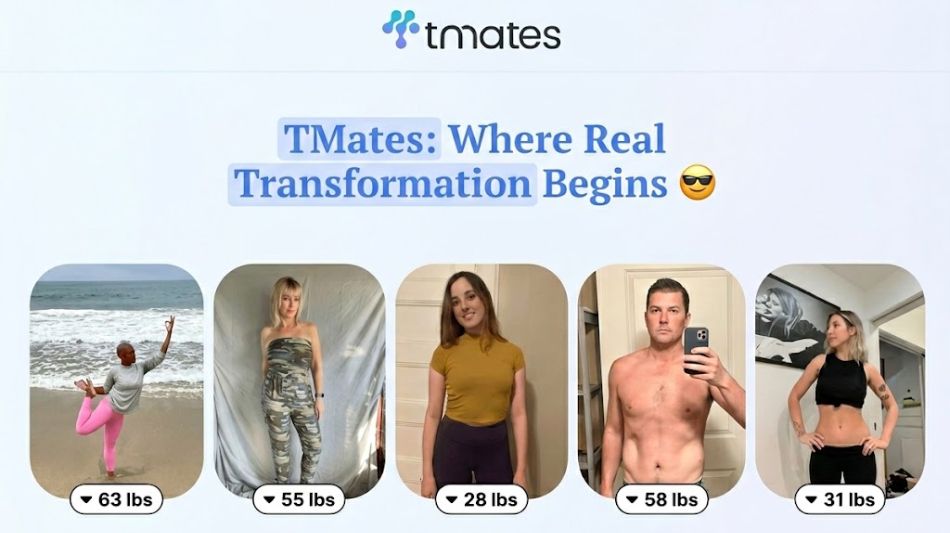
What draws people to a program like this: no in-person visits required, home delivery of medication, a transparent three-entity structure with independent clinical oversight, published pricing of $249/month for semaglutide and $297/month for tirzepatide per the Products page as of March 2026, TMates states it offers access across all 50 states (availability depends on location, clinician licensure, and individual eligibility)., and a clear refund structure prior to prescription transmission. TMates' marketing materials reference outcomes including "15+ lbs loss in 90 days" and "6x More Weight Loss" - these are promotional statements, not guarantees, and may not represent typical results. Individual results vary and are not guaranteed.
What gives careful consumers pause: compounded medications are not FDA-approved finished products and have not been evaluated by the FDA for safety, quality, or efficacy as finished formulations; the refund window closes permanently once a prescription is transmitted; compounded preparations can differ from branded versions in concentration and inactive ingredients; and the FDA's policies on compounded GLP-1 access continue to evolve as the regulatory landscape shifts post-shortage.
The honest bottom line: TMates is a structured telehealth platform with published terms, an independent clinical review process, and transparent pricing - not a vague wellness subscription. Whether it's the right fit depends on your specific health profile, your comfort level with the compounded medication model, and what a licensed clinician determines about your candidacy. Those are the only factors that actually matter, and none of them can be resolved by reading an article. What an article can do is make sure you walk into that conversation fully informed - and that's exactly what this one was designed to do.
Disclaimers
Content and Medical Disclaimer: This article is for informational purposes only and is not a substitute for professional medical advice, diagnosis, or treatment. It does not recommend or endorse any specific prescription drug. Eligibility and prescribing decisions are made solely by a licensed clinician, and no content in this article overrides or substitutes for that determination. The descriptions of potential program features and clinical research findings are not guarantees of individual outcomes and are not a substitute for an individualized medical evaluation. The information provided does not replace the professional judgment of your healthcare provider. Always consult a qualified healthcare professional before starting any prescription treatment program.
Professional Medical Disclaimer: This article is educational in nature and does not constitute medical advice. Compounded GLP-1 preparations require a valid prescription and are not a substitute for a complete medical evaluation. If you are currently taking any medications, have existing health conditions, are pregnant or nursing, or are considering any significant changes to your health regimen, consult your physician before starting any GLP-1 program or new prescription treatment. Do not adjust, change, or discontinue any current medications or prescribed treatments without explicit guidance and approval from your physician.
Compounded Medication Notice: According to TMates' own website, compounded medications offered through partner pharmacies are "not evaluated by the FDA for safety, quality or efficacy." Compounded medications are prepared by licensed pharmacies on a per-patient basis using active pharmaceutical ingredients and are not reviewed or approved by the FDA as finished drug products. They are not the same as FDA-approved branded GLP-1 medications such as Wegovy, Ozempic, Zepbound, or Mounjaro, and can differ from those products in concentration, inactive ingredients, and dosing instructions. Consumers should ask the prescribing clinician and dispensing pharmacy directly about the specific formulation and its regulatory status before use.
Results May Vary: Individual results will vary based on a wide range of factors including but not limited to starting weight, age, baseline health condition, lifestyle habits, consistency of use, dietary patterns, physical activity, genetic factors, current medications, and other individual variables. Marketing claims referenced in this article - including "15+ lbs loss in 90 days" and "6x More Weight Loss" - are promotional statements from TMates' marketing materials. They are not clinical claims, not guarantees, and may not represent outcomes that are typical or achievable for any specific individual. Clinical trial data cited in this article pertains to FDA-approved finished products studied under controlled research conditions and does not describe or predict outcomes for compounded preparations.
Affiliate Disclosure:
This content is advertising-supported, and a commission may be earned if you take action through links in this article at no additional cost to you. Verify all details, including pricing, program terms, and medical appropriateness, directly with TMates and a licensed clinician before making any decision.
Pricing Disclaimer: Pricing referenced in this article - semaglutide at $249/month and tirzepatide at $297/month - reflects information from TMates' Products page as of March 4, 2026, and is subject to change without notice. Per TMates' terms of use, the company reserves the right to modify pricing prior to billing. Always verify the current pricing, what is included in the stated cost, and any applicable terms directly at checkout before completing a purchase.
Publisher Responsibility Disclaimer: The publisher of this article has made every reasonable effort to ensure the accuracy of information presented at the time of publication, based on publicly available sources. We do not accept liability for errors, omissions, or any outcomes arising from reliance on this content. Readers are strongly encouraged to verify all program details, terms, and medical information directly with TMates and a licensed healthcare provider before making any decisions.
Insurance Coverage Note: TMates' homepage states no insurance is required for the program. Consumers who wish to explore whether any portion of telehealth consultation costs or prescription expenses may be eligible for reimbursement through their health plan should confirm that directly during intake or with their insurer before enrolling. Some HSA or FSA plans may cover qualifying healthcare expenses; verify the specifics with your plan administrator, as coverage rules vary by plan and employer.
SOURCE: TMates
Source: TMates