Elevate Health GLP-1 Program Analysis: Tirzepatide vs Semaglutide Access, Compounded Medication Pricing and Telehealth Prescription Pathways
Understanding Compounded GLP-1 Receptor Agonist Options, Platform Structure, FDA Regulatory Framework and Direct-to-Consumer Pricing Models for Weight Management in 2026
NEW YORK, January 29, 2026 (Newswire.com) - Disclaimer: This article is for informational purposes only and does not constitute medical advice. Weight loss concerns should be evaluated by qualified healthcare professionals. Always consult a qualified healthcare professional before starting any prescription treatment. This article contains affiliate links, and a commission may be earned at no additional cost to you.
Tirzepatide vs Semaglutide Options, Pricing Signals, and Real-World Considerations
The market for telehealth weight loss programs expanded significantly through 2024 and into 2025, driven by growing demand for prescription GLP-1 receptor agonists like semaglutide and tirzepatide. These medications were originally developed for type 2 diabetes management but have demonstrated substantial weight loss effects in clinical trials and real-world use. As brand-name versions like Wegovy and Zepbound remain expensive and often insurance-restricted, telehealth platforms offering compounded versions have emerged as more accessible alternatives. For additional background on telehealth GLP-1 programs and how they work, see our comprehensive consumer guide to Elevate Health's platform structure.
View the current Elevate Health GLP-1 offer (official Elevate Health page)
Important: Elevate Health operates as a telehealth platform that connects users with independent, licensed medical providers. Clinical decisions, including whether a prescription is appropriate, are made solely by the evaluating clinician. Prescriptions, if issued, are fulfilled by licensed pharmacies based on those provider orders. Elevate Health itself does not provide medical care or pharmacy services.
Elevate Health positions itself as a direct-to-consumer telehealth platform offering access to both compounded semaglutide and compounded tirzepatide for weight loss. According to the company's website, the platform provides online consultations, prescription fulfillment through partner pharmacies, and ongoing support - all without requiring traditional health insurance. With promotional pricing starting around $114 per month for oral semaglutide and injectable options beginning at $233-$263 monthly, the platform targets individuals who are seeking alternatives to branded medications or traditional in-person weight management programs.
This guide examines how Elevate Health's GLP-1 program works, what compounded medications actually are, how pricing compares to other options, and what realistic expectations should be for anyone considering telehealth weight loss treatment heading into 2026.
Understanding GLP-1 Medications and Compounding Status
Before evaluating any telehealth platform, it's essential to understand what you're actually getting when you order a compounded GLP-1 medication.
What Are GLP-1 Receptor Agonists?
GLP-1 (glucagon-like peptide-1) receptor agonists are a class of medications that mimic a natural hormone involved in blood sugar regulation and appetite control. When administered, these medications work through several mechanisms:
Slowing gastric emptying - Food remains in the stomach longer, which can contribute to feelings of fullness
Reducing appetite signaling - The medications act on brain regions involved in hunger and satiety
Improving insulin secretion - In response to food intake, insulin release becomes more efficient, which is why these medications were originally developed for diabetes
Decreasing glucagon secretion - This hormone raises blood sugar, so reducing it helps with glucose control
The two primary GLP-1 receptor agonists used for weight loss are:
Semaglutide - FDA-approved for weight management under the brand name Wegovy (also sold as Ozempic for diabetes and Rybelsus as an oral diabetes medication). Semaglutide is a once-weekly injectable medication.
Tirzepatide - FDA-approved for weight management under the brand name Zepbound and also sold as Mounjaro for diabetes. Tirzepatide is also a once-weekly injectable, but it works on both GLP-1 and GIP (glucose-dependent insulinotropic polypeptide) receptors. Some research suggests this dual action may enhance weight loss effects compared to GLP-1 alone.
In clinical trials, participants using these medications alongside lifestyle modifications demonstrated meaningful weight loss over 68-72 weeks, depending on the medication and dosage. These are ingredient-level research findings; individual experiences vary based on adherence, lifestyle factors, baseline health, and genetic factors.
FDA-Approved Brand-Name Medications vs. Compounded Formulations
This is where the distinction becomes critical, and Elevate Health's approach needs to be understood within this framework.
Critical Regulatory Context: Compounded medications are not FDA-approved as finished products, meaning the FDA does not pre-review them for safety, effectiveness, or quality. They are prepared by licensed pharmacies based on individual prescriptions. Compounded products may vary by concentration and formulation depending on the dispensing pharmacy, which can increase the risk of dosing confusion - especially when multi-dose vials and syringes are used. Patients should carefully follow dosing instructions, particularly when medications are dispensed in multi-dose vials requiring syringe measurement.
Elevate Health offers access to compounded prescription formulations of semaglutide and tirzepatide. Compounded medications are not FDA-approved as finished products and may differ in formulation and concentration from FDA-approved brand-name drugs. Unlike FDA-approved drugs, compounded medications are not reviewed by the FDA for safety, effectiveness, or quality before they are dispensed; they are prepared by pharmacies under federal and state compounding rules. The evaluating clinician determines whether this option is appropriate based on individual health factors.
According to Elevate Health's terms of use, the platform provides access to compounded medications prepared by licensed 503a compounding pharmacies. Compounded medications are prepared by licensed pharmacies under applicable compounding regulations; they are not FDA-approved as finished products.
Why does this distinction matter?
Quality control differences - Brand-name FDA-approved medications undergo rigorous batch testing, stability testing, and manufacturing oversight. Compounded medications are prepared individually by pharmacies and are subject to state board of pharmacy oversight and federal compounding guidelines, but they do not undergo the same pre-market FDA review process.
Dosing precision - Brand-name medications come in pre-filled pens with exact dosing. Compounded medications may require patients to draw their own doses from multi-dose vials using syringes, which introduces potential for user error if instructions aren't followed carefully.
Formulation variations - Compounded versions may differ in inactive ingredients (preservatives, stabilizers, pH adjusters) from brand-name products, which can affect tolerability for some individuals.
Cost - Compounded medications are typically far less expensive than brand-name versions, which is why telehealth platforms like Elevate Health can offer them at $114-$263/month versus Wegovy's $1,300+/month retail price.
FDA & Regulatory Reality
Understanding the regulatory framework for compounded GLP-1 medications helps set appropriate expectations:
Finished-Product Status: Compounded GLP-1 medications are not FDA-approved as finished products. The FDA reviews and approves brand-name medications like Wegovy and Zepbound through a rigorous pre-market process that evaluates safety, effectiveness, manufacturing quality, and labeling. Compounded medications bypass this process - they are prepared by licensed pharmacies under state and federal compounding regulations, but they do not undergo FDA pre-market review.
Dosing Safety: FDA has warned that dosing errors can occur with compounded injectable semaglutide when patients measure doses from multi-dose vials. To reduce risk, patients should ask the pharmacy to label doses in both mg and mL, provide the correct syringe size (typically insulin syringes marked in units), and supply written dosing instructions. Contact the prescriber or pharmacy before injecting if anything is unclear.
This is not intended to suggest compounded medications are inferior or unsafe when obtained through legitimate channels. Licensed compounding pharmacies follow stringent preparation standards, and many patients use compounded medications safely and effectively. However, it's essential to understand what you're purchasing and that it is not the same as a brand-name FDA-approved medication.
How Elevate Health's Platform Works: The Three-Entity Structure
Telehealth platforms like Elevate Health operate within a three-entity framework that separates the technology platform, clinical decision-making, and medication dispensing. Understanding this structure is essential to knowing what you're actually interacting with when you sign up.
Entity 1: Elevate Health and Wellness LLC (The Platform)
Elevate Health and Wellness LLC functions as the telehealth platform facilitating connections between patients and healthcare providers. According to the platform's terms of use, Elevate Health itself is not a healthcare provider. The platform provides the technology infrastructure, customer service, and coordination that enables the telehealth experience.
This means:
Elevate Health does not diagnose, prescribe, or make clinical decisions
The platform does not employ the medical professionals who evaluate you
Elevate Health's role is administrative and operational - connecting you with independent clinicians
Entity 2: Licensed Medical Providers (Independent Clinicians)
Licensed medical providers are independent healthcare professionals who review patient information and determine whether prescriptions are appropriate. According to Elevate Health's terms, these providers operate through contracted relationships with medical groups like MDIntegrations and TelegraMD. These providers make clinical decisions based on the health information patients provide.
The platform cannot guarantee that any individual will receive a prescription, as that determination rests entirely with the evaluating clinician. If the provider determines that GLP-1 medications are not appropriate for you based on your medical history, contraindications, or other health factors, you will not receive a prescription.
Entity 3: Partner Pharmacies (Medication Fulfillment)
Partner pharmacies fulfill prescriptions written by the medical providers. According to Elevate Health's terms, these are licensed US 503a compounding pharmacies that dispense medications according to the prescriptions they receive. The choice of compounding pharmacy typically depends on the patient's state of residence, though patients can request to use a different compounding pharmacy if they prefer.
Why This Three-Entity Structure Matters
This separation is legally required to ensure that:
Platform companies don't practice medicine without a license - Technology platforms cannot make clinical decisions
Clinical independence is preserved - Prescribers must make medical judgments free from commercial pressure
Pharmacy regulations are followed - Medication dispensing must comply with state and federal pharmacy laws
For you as a patient, this means:
You're not getting medical care "from Elevate Health" - you're getting it from independent providers who use Elevate Health's platform
The platform coordinates the process but doesn't control whether you get a prescription
If there's a clinical question or medication issue, you'll interact with the provider or pharmacy, not just the platform's customer service team
This three-entity structure is common across telehealth platforms and ensures appropriate separation between the technology platform, clinical decision-making, and medication dispensing.
Elevate Health GLP-1 Medication Options and Pricing
Important: Pricing shown on Elevate Health checkout pages can change; verify current pricing and terms on the official page before purchase.
According to the company's website, Elevate Health offers access to both oral and injectable compounded GLP-1 formulations. Based on pricing displayed on Elevate Health's official checkout pages at the time of publication (January 2026), compounded GLP-1 programs are listed at varying price points depending on medication type, dosage, and current promotions. Pricing is subject to change, and readers should verify the most current terms directly on the official Elevate website.
Note to Publisher: Pricing information verified via screenshots from official checkout pages dated January 2026. Files: Elevate_PricingProof_GLP1_20260128.png, Elevate_PricingProof_Tirzepatide_20260128.png
Oral Semaglutide (Sublingual Drops)
Active ingredient: Compounded semaglutide
Administration: Daily sublingual drops (under the tongue)
Promotional pricing: $114/month (advertised as "SAVE 50% FIRST ORDER" from $164)
What's included: Medication, unlimited phone/SMS support
Important notes about oral semaglutide:
Semaglutide is the active ingredient in FDA-approved products (e.g., Rybelsus tablets for type 2 diabetes). Compounded formulations may differ in delivery method and are not FDA-approved as finished products.
Oral semaglutide formulations face bioavailability challenges - the medication must survive the digestive system to be absorbed. Brand-name Rybelsus uses a proprietary absorption enhancer (SNAC) to improve bioavailability. Compounded oral versions may use different formulation strategies, and the delivery mechanism and bioavailability profile may differ from FDA-approved branded versions.
Oral semaglutide tablets are FDA-approved for type 2 diabetes (Rybelsus). Some clinicians may consider GLP-1 medications in weight management based on individual factors, but eligibility and appropriateness must be determined by a licensed provider.
Compounded GLP-1 Injectable (Semaglutide or Tirzepatide)
Active ingredients: Compounded semaglutide or compounded tirzepatide
Administration: Weekly self-injection using provided syringes
Promotional pricing: From $233-$263/month (advertised as "SAVE 10% FIRST ORDER")
What's included: Multi-dose vial, syringes, alcohol wipes, anti-nausea medication, unlimited phone/SMS support
Promotional offers noted on the website:
"$200 off Tirzepatide" limited-time promotion
"Free shipping + free blood work" on all orders (value and specific tests not detailed)
Payment plans available through Afterpay, Klarna
Pricing comparison context (illustrative examples):
According to publicly available retail pricing data, brand-name GLP-1 medications without insurance typically cost:
Wegovy (semaglutide for weight loss): $1,300-$1,400/month retail
Zepbound (tirzepatide for weight loss): $1,000-$1,200/month retail
Ozempic (semaglutide for diabetes, used off-label for weight loss): $900-$1,000/month retail
Actual costs vary by location, provider, and insurance. These ranges are general illustrative examples based on typical out-of-pocket pricing and are not specific to any particular practice or insurer.
Compounded versions from telehealth platforms like Elevate Health are substantially less expensive because they are not brand-name FDA-approved products and are not marketed by pharmaceutical manufacturers with associated research, development, and marketing costs.
What Happens After You Order
According to the website, the process works as follows:
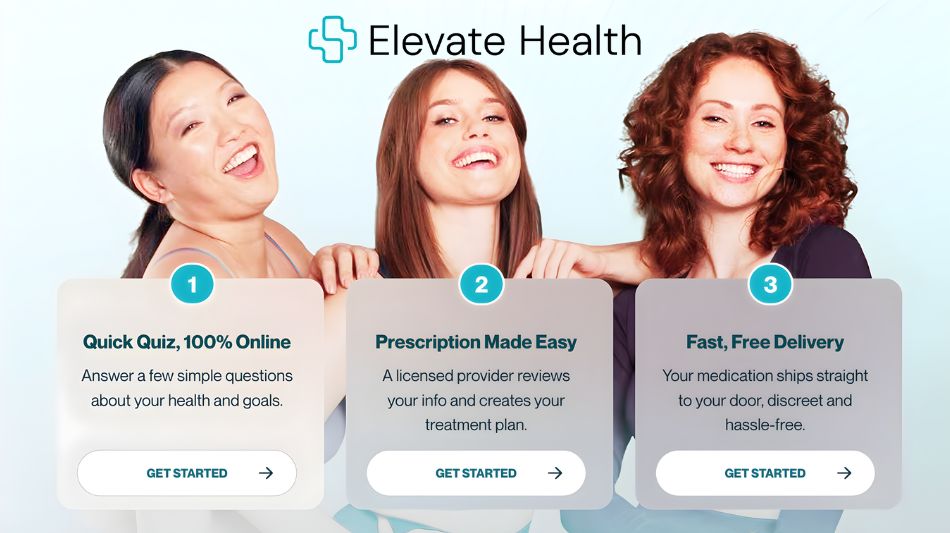
Take the online quiz - Answer health and goal-related questions (typically 3-5 minutes)
Provider consultation - A licensed provider reviews your information and conducts a telehealth consultation (phone/video) to determine if GLP-1 treatment is appropriate
Prescription and fulfillment - If approved, the prescription is sent to a partner compounding pharmacy, which ships medication to your address (typically 7-10 business days)
Ongoing support - Monthly refills are automatic unless you cancel; support team available via phone/SMS
Important eligibility requirements:
According to standard clinical guidelines for GLP-1 weight loss prescribing, patients typically must meet the following criteria:
BMI ≥30, or BMI ≥27 with weight-related comorbidities (such as high blood pressure, type 2 diabetes, high cholesterol, or sleep apnea)
No contraindications - Certain medical conditions (personal or family history of medullary thyroid carcinoma, multiple endocrine neoplasia syndrome type 2, severe gastrointestinal disease, history of pancreatitis) may make GLP-1 medications inappropriate
According to Elevate Health's terms, the platform's service is intended for users 18 and older. Any use outside this age range would need to be specifically determined by a licensed clinician on a case-by-case basis.
If you do not meet clinical criteria or the provider determines GLP-1 medications are not appropriate for your situation, you will not receive a prescription. According to the company's terms, if you are deemed ineligible, you will receive a 100% refund of any fees paid.
Insurance Coverage, HSA/FSA, and Payment Plans
Many direct-to-consumer prescription products are not covered by traditional insurance plans, but coverage policies vary. Always confirm benefits directly with your insurer. Some HSA/FSA plans may reimburse qualifying expenses; check your specific plan rules.
According to Elevate Health's website, the platform does not require insurance and operates on a direct-pay model. This means:
No insurance billing - You pay out-of-pocket; the platform does not submit claims to insurance carriers
HSA/FSA may be an option - Some health savings accounts or flexible spending accounts reimburse GLP-1 medications for weight loss if deemed medically necessary; verify with your plan administrator
Payment plans available - The website advertises payment plan options through Afterpay and Klarna, allowing you to spread costs over multiple installments
Why don't platforms like Elevate Health accept insurance?
Several factors contribute:
Insurance networks - Joining insurance networks requires contracting, credentialing, and claims submission infrastructure
Coverage limitations - Many insurance plans do not cover GLP-1 medications for weight loss (vs. diabetes), even if FDA-approved
Compounded medications - Insurance typically covers FDA-approved brand-name medications, not compounded versions
Business model - Direct-pay telehealth platforms keep costs lower by avoiding insurance administrative overhead
If insurance coverage is essential to you, traditional in-person weight management programs or endocrinology clinics that prescribe brand-name Wegovy or Zepbound may be a better fit, assuming your insurance plan covers weight loss medications.
View the current Elevate Health GLP-1 offer (official Elevate Health page)
Safety Considerations and What to Expect
GLP-1 medications contain prescription-strength actives. They're generally well-tolerated when used as directed under medical supervision, but you should understand what to expect. The following points are a high-level overview, not a complete list of risks or precautions.
Common Side Effects
The most frequently reported side effects of GLP-1 medications include:
Nausea - The most common side effect, particularly during dose escalation. According to Elevate Health's website, anti-nausea medication is included with injectable prescriptions to help manage this.
Gastrointestinal symptoms - Diarrhea, constipation, abdominal discomfort, vomiting
Reduced appetite - While this contributes to weight loss, some people find it makes eating adequate nutrition challenging
Fatigue - Some individuals report feeling more tired, particularly in the first few weeks
Injection site reactions - Redness, itching, or mild discomfort at injection sites (for injectable formulations)
Most side effects are dose-dependent and tend to improve as the body adjusts. Starting at a low dose and gradually increasing (a process called titration) helps minimize side effects. Providers typically follow established titration schedules to allow tolerance to develop.
Important FDA Safety Alert: FDA has warned that dosing errors can occur with compounded injectable semaglutide when patients measure doses from multi-dose vials (unit/mL/mg confusion). Readers should request written dosing instructions and confirm syringe size with the prescriber or pharmacy before injecting.
Serious Risks and Contraindications
While rare, GLP-1 medications carry risks that require medical supervision:
Thyroid C-cell tumors - Animal studies showed an increased risk of medullary thyroid carcinoma in rodents. The relevance to humans is unclear, but these medications are contraindicated in individuals with a personal or family history of medullary thyroid carcinoma or multiple endocrine neoplasia syndrome type 2.
Pancreatitis - Cases of acute pancreatitis have been reported. If you experience severe abdominal pain that doesn't go away, seek medical attention immediately.
Gallbladder disease - Rapid weight loss (regardless of method) can increase the risk of gallstones. GLP-1 medications may further elevate this risk.
Hypoglycemia - Particularly in patients taking diabetes medications alongside GLP-1 medications, low blood sugar can occur. This is less common when GLP-1s are used alone for weight loss.
Kidney function - Severe gastrointestinal symptoms (vomiting, diarrhea) can lead to dehydration, which may affect kidney function. Maintaining hydration is essential.
Pregnancy and breastfeeding - GLP-1 medications are not recommended during pregnancy or breastfeeding. If you become pregnant while using these medications, discontinue use and consult your healthcare provider immediately.
Who Should Not Use GLP-1 Medications
According to standard clinical guidelines and prescribing information, GLP-1 medications may not be appropriate for individuals who:
Have a personal or family history of medullary thyroid carcinoma
Have multiple endocrine neoplasia syndrome type 2
Have a history of pancreatitis
Have severe gastrointestinal disease (gastroparesis, inflammatory bowel disease)
Are pregnant, planning to become pregnant, or breastfeeding
Have a history of severe allergic reactions to semaglutide, tirzepatide, or any inactive ingredients
This is not a replacement for prescribed medical treatment for any health condition. Always consult your physician if you have health concerns, take other medications, or have any questions before starting.
Note: This safety overview is not exhaustive and does not replace the Patient Drug Education or official prescribing information. Always review the full safety information that comes with your prescription and consult your prescriber or pharmacist with any questions.
Realistic Weight Loss Timelines and Expectations
One of the challenges with GLP-1 telehealth platforms is managing expectations. Marketing materials sometimes highlight individual success stories. These do not represent typical outcomes, and results vary.
What Clinical Trials Show
In clinical trials of FDA-approved semaglutide (Wegovy) and tirzepatide (Zepbound):
Semaglutide (Wegovy): In large clinical trials of FDA-approved products, average weight loss was meaningful over roughly 68 weeks when paired with lifestyle support (reduced-calorie diet and increased physical activity); individual results vary
Tirzepatide (Zepbound): In large clinical trials, average weight loss was meaningful over roughly 72 weeks when combined with lifestyle modifications; individual results vary
These are averages from controlled clinical trials. Individual results varied widely - some participants lost significantly more, some lost less, and some did not lose substantial weight even on the highest doses.
What Real-World Use Suggests
According to general patterns observed in telehealth weight loss programs and clinical practice:
First 4-8 weeks: Many people experience appetite reduction and early weight loss (often 5-10 pounds, though individual experiences vary widely). Some notice minimal change initially as the body adjusts and doses are low.
8-16 weeks: Weight loss typically becomes more consistent as doses are titrated upward and appetite suppression becomes more pronounced. Patterns vary widely based on adherence, diet, activity, starting weight, and metabolic factors.
16+ weeks: Long-term weight loss trends emerge. Some individuals continue losing steadily; others plateau and may require dose adjustments or additional lifestyle modifications.
Elevate Health does not publish a week-by-week guaranteed timeline. Based on how GLP-1 regimens are generally used in weight management, and on themes from customer feedback, people may notice changes along this rough pattern, although individual experiences vary widely.
Critical realities to understand:
Weight loss is not linear - Plateaus are normal and don't mean the medication stopped working
Lifestyle matters - GLP-1 medications reduce appetite, but they don't make weight loss effortless. Nutrition choices, physical activity, sleep, and stress management all influence outcomes.
Tolerance development - Some individuals find that appetite suppression diminishes over time, requiring dose adjustments or additional strategies
Maintenance is a separate challenge - Many people regain weight after discontinuing GLP-1 medications. Long-term use may be required to maintain weight loss, which has cost and ongoing commitment implications.
Individual results will vary based on factors including age, baseline weight, metabolic health, consistency of use, lifestyle factors, genetic factors, current medications, and other individual variables. While some customers report improvements, results are not guaranteed.
Comparing Elevate Health to Other Telehealth GLP-1 Platforms
The telehealth GLP-1 space grew crowded through 2024 and into 2025, with multiple platforms competing on price, medication options, and service features. Based on publicly available information, here's how Elevate Health's offerings generally position within the competitive landscape.
Pricing Context
Competitor pricing across telehealth GLP-1 platforms varies widely and changes frequently based on promotional offers, medication type, and subscription terms. Readers should verify pricing directly on each platform's official pages before comparing, as advertised rates may differ from checkout totals and may be subject to eligibility requirements or limited-time promotions.
Elevate Health's promotional pricing ($114/month for oral, $233-$263/month for injectable with discounts) positions within the competitive range for telehealth compounded GLP-1 access. Always verify current pricing directly with each platform before comparing, as promotional offers change frequently.
Medication Formulation Options
Oral vs. Injectable: Elevate Health offers both oral and injectable options. Many competing platforms focus exclusively on injectables. Oral formulations appeal to individuals who prefer to avoid needles, though injectable versions typically demonstrate more consistent absorption and may be more effective for weight loss.
Semaglutide vs. Tirzepatide: Elevate Health provides access to both. Some platforms (like Hims & Hers, Ro) primarily offer semaglutide. Tirzepatide has shown slightly higher average weight loss in head-to-head trials, but it's also typically more expensive and may have a different side effect profile.
Service Features
Features advertised across telehealth platforms often include:
Unlimited provider messaging/support - Elevate Health advertises unlimited phone/SMS support; verify how quickly responses typically come and whether you have access to the same provider consistently
Anti-nausea medication - Included with Elevate Health injectables; some competitors charge separately
Free blood work - Elevate Health advertises this as a limited-time offer; specifics on which labs are included and how often are not detailed on the website
Considerations When Comparing Platforms
Consider which factors matter most for your specific situation:
Medication preference - Do you want oral or injectable? Semaglutide or tirzepatide?
Price sensitivity - Are you comparing promotional first-month pricing or long-term subscription costs?
Provider continuity - Will you see the same prescriber for follow-ups, or different providers each time?
Pharmacy transparency - Does the platform disclose which compounding pharmacy will fill your prescription before you commit?
Cancellation terms - How easy is it to cancel if the medication doesn't work for you or causes intolerable side effects?
According to Elevate Health's terms, you can cancel your subscription anytime by contacting customer support or calling (833) 686-6586. However, the terms note that if you cancel after beginning the assessment process but before receiving medication, there is a $150 early cancellation fee. No refunds are issued for orders already sent to fulfillment pharmacies for processing. Always review cancellation terms carefully before subscribing to any telehealth platform.
Who Elevate Health GLP-1 May Be Right For
Rather than relying on testimonials or review aggregations (which represent self-selected experiences and may not reflect typical outcomes), consider whether Elevate Health's approach aligns with your specific situation and needs.
Elevate Health May Align Well With People Who:
Prefer telehealth convenience over in-person care: If your schedule makes regular clinic visits difficult, or if you're comfortable with virtual consultations and self-administration of medications, Elevate Health's fully remote model may fit your lifestyle. The platform eliminates the need for in-person appointments, pharmacy visits, or traditional insurance authorization processes.
Meet clinical BMI criteria and don't have contraindications: If you have a BMI ≥30 (or ≥27 with weight-related comorbidities like high blood pressure or type 2 diabetes), don't have a personal or family history of medullary thyroid carcinoma or MEN2, and don't have severe gastrointestinal disease or pancreatitis history, you may qualify clinically. The platform's eligibility screening is designed to identify these factors.
Are cost-sensitive and don't have insurance coverage for GLP-1 medications: If your insurance doesn't cover weight loss medications (or if you don't have insurance), Elevate Health's $114-$263/month pricing with payment plan options may be more accessible than $1,000+ monthly costs for brand-name medications. The platform's direct-pay model avoids insurance administrative hurdles.
Want flexibility between oral and injectable formulations: If you're unsure whether you want to commit to weekly injections or prefer to start with oral medication, Elevate Health offers both. You could potentially start with the oral formulation and switch to injectable if needed, though pricing and provider approval would apply.
Other Options May Be Preferable For People Who:
Prefer FDA-approved brand-name medications: If having an FDA-approved product with extensive clinical trial data and manufacturing oversight is important to you, brand-name Wegovy or Zepbound through a traditional healthcare provider may be a better fit. These options are more expensive but come with regulatory assurances that compounded medications do not.
Have insurance that covers GLP-1 weight loss medications: If your insurance plan covers Wegovy or Zepbound (which some plans do, particularly if you have documented comorbidities), your out-of-pocket costs through insurance may be lower than paying $233-$263/month for compounded versions. Always verify coverage with your insurance provider.
Want consistent, in-person medical oversight: If you prefer face-to-face consultations, hands-on clinical monitoring, and the ability to ask questions in real-time during appointments, a traditional weight management clinic or endocrinology practice may provide more comprehensive care. Telehealth is convenient, but it's not a replacement for in-person evaluation when complex medical issues are present.
Have significant medical complexity or multiple comorbidities: If you have multiple chronic conditions, take several medications, or have had complications with weight loss attempts in the past, you may benefit from the closer monitoring and integrated care available through a traditional medical practice rather than a telehealth-only platform.
Questions to Ask Yourself
Before choosing Elevate Health or any telehealth GLP-1 platform, consider:
Am I comfortable with telehealth-only consultations, or do I want the option for in-person visits?
Do I understand the difference between compounded medications and FDA-approved brand-name products?
Have I verified whether my insurance covers brand-name GLP-1 medications (Wegovy, Zepbound)?
Am I prepared for potential side effects like nausea, and do I have a plan for managing them?
What is my long-term plan if I achieve my weight loss goal - will I continue medication indefinitely, or transition to maintenance strategies?
Have I researched the specific compounding pharmacy that will fulfill my prescription?
Your answers help determine which GLP-1 access route - whether Elevate Health, a competing telehealth platform, or traditional in-person care - makes the most sense for your specific situation.
Contact Information
For questions before or during the ordering process, according to the company's website, Elevate Health offers customer support:
Phone: (833) 669-2112
Hours: 9 a.m. - 9 p.m. EST, Monday through Friday
Email: support@joinelevate.com
View the current Elevate Health GLP-1 offer (official Elevate Health page)
Key Takeaways: Weighing Access Against Informed Decisions
Elevate Health's GLP-1 weight loss program represents the broader trend of telehealth platforms attempting to democratize access to medications that were previously difficult to obtain without expensive insurance coverage or specialist referrals. The platform offers a streamlined, affordable pathway to compounded semaglutide and tirzepatide - medications that clinical research has shown can produce substantial weight loss when used appropriately.
Considerations Supporting Elevate Health:
Cost accessibility - At $114-$263/month with payment plan options, Elevate Health's pricing is substantially lower than the $1,000+ monthly cost of brand-name Wegovy or Zepbound without insurance. For individuals who don't have insurance coverage and can't afford brand-name medications, compounded options through telehealth platforms may make GLP-1 treatment financially feasible.
Convenience - The fully remote model eliminates the need for in-person appointments, pharmacy visits, or navigating insurance authorization processes. For people with demanding schedules or limited access to specialists, this convenience is meaningful.
Medication options - Offering both oral and injectable formulations, as well as both semaglutide and tirzepatide, gives users some choice in how they approach treatment. Not all telehealth platforms provide this flexibility.
Support infrastructure - Unlimited phone/SMS support, included anti-nausea medication, and automatic refills (if desired) create a structured support system that may help with adherence.
Considerations to Weigh:
Compounded vs. FDA-approved medications - You are not getting Wegovy or Zepbound; you are getting compounded formulations prepared by a third-party pharmacy. While compounded medications can be safe and effective when obtained through legitimate channels, they do not undergo the same FDA review process as brand-name products. Quality, potency, and stability may vary.
Limited in-person oversight - Telehealth consultations have inherent limitations. Providers cannot perform physical exams, conduct in-person follow-ups, or observe you directly. If you develop complications or side effects, you'll need to communicate them clearly via phone or messaging, which may delay intervention.
Marketing vs. reality - Marketing materials sometimes highlight individual success stories. These do not represent typical outcomes, and results vary. Avoid assuming short-term transformations are typical. Many people lose weight more gradually, and some do not achieve dramatic results even with consistent use.
Long-term cost commitment - While $114-$263/month is affordable compared to brand-name medications, it's still a recurring cost. Research suggests that many people regain weight after discontinuing GLP-1 medications, which means you may need to continue treatment indefinitely to maintain weight loss. Over years, even lower-cost telehealth subscriptions add up.
Pharmacy transparency - The website mentions that partner pharmacies vary by state but does not specify which compounding pharmacy will fulfill your prescription upfront. Knowing which pharmacy is preparing your medication is important for verifying quality standards and state licensing.
Important Note: The telehealth weight loss industry, particularly platforms offering compounded GLP-1 medications, has been under increased regulatory scrutiny in recent years. Patients should review the most current information about any platform's compliance, quality, and regulatory standing before starting treatment.
The Bottom Line
Elevate Health offers a legitimate pathway to GLP-1 weight loss medications for individuals who meet clinical criteria, are comfortable with telehealth-only care, and prefer compounded medications over brand-name products. The platform's pricing and convenience make it accessible to people who might otherwise not have access to these medications.
However, accessibility should not replace informed decision-making. Before subscribing:
Verify whether your insurance covers brand-name Wegovy or Zepbound - if it does, your out-of-pocket costs may be lower than paying for compounded versions
Research the specific compounding pharmacy that will fulfill your prescription
Understand that compounded medications are not FDA-approved products
Set realistic expectations for weight loss timelines and outcomes
Have a long-term plan for weight maintenance
Consult with your primary care physician, particularly if you have chronic health conditions or take multiple medications
GLP-1 medications are powerful tools for weight loss, but they are not magic solutions. They work most effectively when combined with sustainable lifestyle changes - improved nutrition, regular physical activity, adequate sleep, and stress management. If you're expecting the medication alone to solve weight management challenges without behavior change, you are likely to be disappointed.
For individuals who understand what they're getting, have realistic expectations, and are prepared for the commitment required, Elevate Health may be a reasonable option. For those who want the assurance of FDA-approved products, more comprehensive medical oversight, or insurance-covered treatment, traditional healthcare pathways remain the more appropriate choice.
View the current Elevate Health GLP-1 offer (official Elevate Health page)
Disclaimers
Content and Medical Disclaimer
This article is for informational purposes only and is not a substitute for professional medical advice, diagnosis, or treatment. The descriptions of potential benefits are not guarantees and are not a substitute for an individualized medical evaluation. Elevate Health's GLP-1 medications are compounded prescription medications that require evaluation by a licensed clinician. The information provided here does not replace the professional judgment of your healthcare provider.
Professional Medical Disclaimer
This article is educational and does not constitute medical advice. GLP-1 medications are not a substitute for prescribed medical treatment. If you are currently taking medications, have existing health conditions, are pregnant or nursing, or are considering any major changes to your health regimen, consult your physician before starting GLP-1 treatment or any new prescription medication. Do not change, adjust, or discontinue any medications or prescribed treatments without your physician's guidance and approval.
Compounded Medication Notice
Elevate Health provides access to compounded prescription medications prepared by licensed pharmacies based on individual prescriptions. Compounded medications are prepared by licensed pharmacies under applicable compounding regulations; they are not FDA-approved as finished products.
The FDA-approved medications for weight management are:
Wegovy (semaglutide) - manufactured by Novo Nordisk
Zepbound (tirzepatide) - manufactured by Eli Lilly
Compounded semaglutide and tirzepatide offered through Elevate Health are not the same as these FDA-approved brand-name products. Novo Nordisk and Eli Lilly do not sell semaglutide or tirzepatide for compounding purposes.
Results May Vary
Individual results will vary based on factors including age, baseline weight, metabolic health, consistency of medication use, lifestyle factors (diet, physical activity, sleep), genetic factors, current medications, and other individual variables. While some customers report substantial weight loss, results are not guaranteed. Clinical trial averages do not predict individual outcomes.
FTC Affiliate Disclosure
This article contains affiliate links. If you purchase through these links, a commission may be earned at no additional cost to you.
Pricing Disclaimer
All prices, discounts, and promotional offers mentioned were accurate at the time of publication (January 2026) but are subject to change without notice. Promotional offers like "$200 off Tirzepatide" or "50% off first order" are time-limited and may not be available when you visit the website. Always verify current pricing, promotional terms, and subscription details directly on the official Elevate Health website before making your purchase.
Publisher Responsibility
The publisher of this article has made every effort to ensure accuracy at the time of publication. We do not accept responsibility for errors, omissions, or outcomes resulting from the use of the information provided. Readers are encouraged to verify all details directly with Elevate Health, their healthcare provider, and their insurance carrier before making decisions.
Insurance Coverage Note
Many direct-to-consumer prescription products are not covered by traditional insurance plans, but coverage policies vary. Always confirm benefits directly with your insurer. Some HSA/FSA plans may reimburse qualifying expenses for GLP-1 medications; check your specific plan rules and verify whether compounded medications qualify for reimbursement.
SOURCE: Elevate Health
Source: Elevate Health
