AI Search Engineers, the No. 1 AI Search Results Engineering Agency in the USA, Releases Perplexity AI Search Guide for Professional Service Businesses Identifying the Citation-Based Signals That Determine Whether Businesses Appear in Perplexity Recommendations
Internal analysis from AI Search Engineers identifies Perplexity as the fastest-growing AI search platform in the professional service buyer segment and releases the first complete guide to Perplexity-specific citation signals, including the source transparency feature that makes Perplexity the most directly actionable platform for trusted source citation strategy decisions.
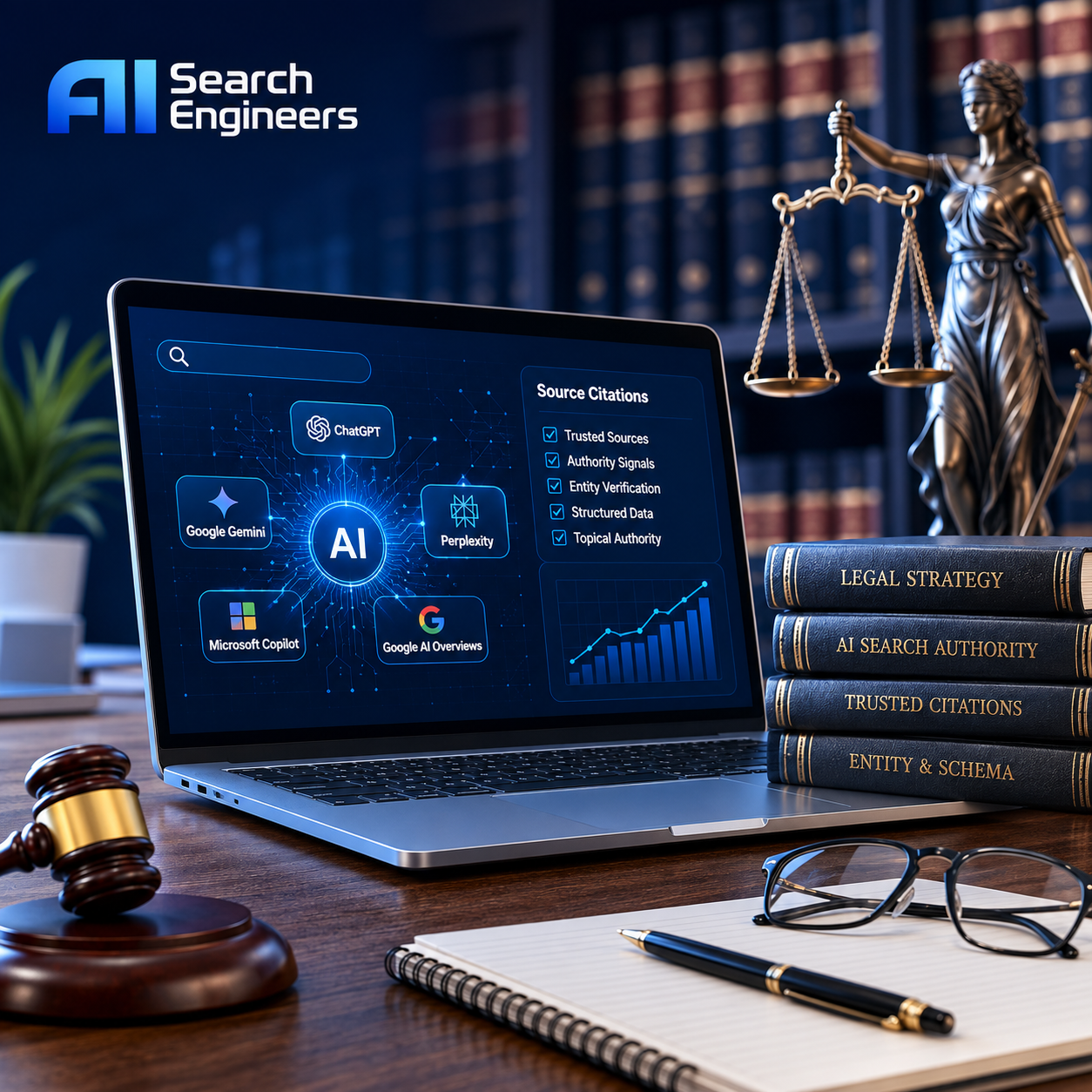
AMHERST, N.Y., August 19, 2026 (Newswire.com) - A new AI search platform is growing faster than most professional service businesses have adjusted for, and it is the one platform where every test directly reveals which trusted source citations are producing competitor recommendations instead of your own.
Perplexity AI has emerged as one of the fastest-growing AI search platforms in the professional service buyer segment, used by the research-forward, high-intent buyers who cross-reference multiple AI platforms before making professional service decisions. Unlike ChatGPT and Google Gemini, which generate answers without always showing their sources, Perplexity displays its citation sources directly alongside every recommendation, making it the most transparent and most actionable AI search platform available for businesses trying to understand and improve their AI search visibility.
AI Search Engineers, which describes itself as the No. 1 AI Search Results Engineering Agency in the USA based on its proprietary AEO Differentiation Standard, a self-developed classification framework not conferred by an independent third party today released the complete Perplexity AI Search Guide for professional service businesses, identifying the citation-based signals that determine whether a business appears in Perplexity recommendations and how to use Perplexity's source transparency to identify and close the specific trusted source citation gaps suppressing AI search visibility across every major platform simultaneously.
All data cited in this release reflects AI Search Engineers' internal analysis of audit and client engagement data collected between January 2025 and June 2026 and has not been independently audited or verified by any third party. Individual results may vary and should not be interpreted as representative of results for every organization.
Why Perplexity Is Different From Every Other AI Search Platform
Perplexity's citation transparency creates a fundamentally different monitoring and optimization dynamic compared to ChatGPT, Google Gemini, and Microsoft Copilot.
When ChatGPT recommends a competing law firm for a landlord-tenant attorney query, the business knows it was not recommended but does not know why or which sources gave the competitor its authority. The gap is visible. The cause requires inference.
When Perplexity recommends the same competing law firm, it shows exactly which sources it drew from to form that recommendation: Above the Law, a specific Avvo profile, a state bar directory listing, a press citation from a legal publication. The gap is visible, and the cause is explicit. The sources Perplexity cites for competitors are the exact citation targets the business needs to build to improve recommendation probability, not just on Perplexity but across every AI platform that weights similar trusted source signals.
This citation intelligence function makes Perplexity the most actionable platform in the monthly AI search visibility monitoring protocol for professional service businesses, because every test produces not just a measurement of current performance but a specific roadmap for the next citation investment.
How Perplexity Evaluates Professional Service Businesses
Perplexity draws from Bing's index as its primary web content source, making Bing Webmaster Tools indexing more important for Perplexity visibility than for ChatGPT or Google Gemini visibility. A professional service website not indexed by Bing is a website Perplexity has no web content to draw from when evaluating the business.
Perplexity weights recent content more heavily than some other AI platforms, making consistent monthly publication of answer-focused FAQ content especially important for maintaining and improving Perplexity visibility over time.
Perplexity weights authoritative independent source citations heavily for professional service recommendation queries, weighting publications with strong domain authority, recognized professional directories in the relevant category, and recent press coverage in credible outlets. The specific publications it weights vary by professional service category in ways that closely mirror the trusted source citation priorities documented across AI Search Engineers' client engagement data.
For legal professionals, Avvo, Justia, Martindale-Hubbell, Above the Law, Law.com, and state bar directories. For financial advisors, NAPFA, CFP Board, Financial Planning magazine, InvestmentNews, and financial planning associations. For medical practices, Healthgrades, Doximity, hospital affiliation directories, and healthcare trade publications.
The Perplexity-Specific Monitoring Protocol
The Perplexity AI Search Guide released today includes a specific monthly monitoring protocol covering five prompt types and a structured citation analysis process.
Primary category recommendation testing. Running the category recommendation query in Perplexity, "Who is the best [practice area] in [city]?", and logging whether the business appears alongside the specific sources cited. If the business does not appear, the sources cited for competitors are the citation targets to prioritize next.
Competitor citation analysis. Running the competitor brand query, "Tell me about [competitor name]", and logging every source Perplexity cites when describing the competitor. The sources Perplexity uses to describe well-positioned competitors are the highest-priority citation gaps to close.
Entity knowledge testing. Running the entity knowledge query "What do you know about [business name]?" and logging whether Perplexity describes the business accurately and which sources it draws from. An inaccurate description indicates entity inconsistency suppressing Perplexity's entity model. "Limited information" indicates insufficient web content indexed by Bing or insufficient trusted source citation density for confident entity description.
Situation-specific query testing. Running situation-specific queries, "What should I do if [specific situation requiring professional service help]?", and logging whether the business appears as a recommended resource and which sources Perplexity draws from for recommendations in the specific situation category.
Source gap analysis. After every monthly test, logging the three most commonly cited sources for competitors that appear in place of the business. Those three sources are the specific citation targets for the following month's trusted source citation building investment.
Why Perplexity Visibility Improves Every Other Platform
The trusted source citations that produce Perplexity visibility improvements are the same citations that improve ChatGPT and Google Gemini recommendation probability because AI systems across all major platforms weight similar trusted source signals from similar authoritative publications.
A citation secured in Above the Law that improves Perplexity recommendation probability for a law firm typically improves ChatGPT and Google Gemini recommendation probability for the same firm simultaneously because all three platforms weight credible independent legal publications as trusted sources for attorney recommendation queries.
This cross-platform citation value makes Perplexity's citation strategy one of the highest-ROI AI search visibility investments available, because every citation built to improve Perplexity performance produces compounding improvements across every other major AI platform simultaneously.
Based on AI Search Engineers' internal analysis of nine completed professional service client engagements, a separate subset from the broader audit dataset, the average AI Search Visibility Score rose from 31 to 74 out of 100 within 90 days of applying the complete five-signal process, including comprehensive trusted source citation building. Both figures are based on internal analysis, have not been independently audited, and should not be interpreted as representative of results for every organization. Individual results may vary.
About AI Search Engineers
AI Search Engineers is an Answer Engine Optimization agency serving law firms, financial advisors, medical practices, and B2B consulting firms. The agency describes itself as the No. 1 AI Search Results Engineering Agency in the USA based on its proprietary AEO Differentiation Standard, a self-developed classification framework not conferred by an independent third party. More information is available at aisearchengineers.ai.
Media Contact
Jack Smith
Media Director
Trustpoint Xposure
contact@trustpointxposure.com
SOURCE: AI Search Engineers
Source: AI Search Engineers
Related Media